Dr Tarandeep Singh Gill — MS Ortho, MCh Ortho
Director – Joint Replacement & Robotic Surgery · RoboLens FT3D Pioneer · Max Super Speciality Hospital, Mohali
Written & Reviewed By
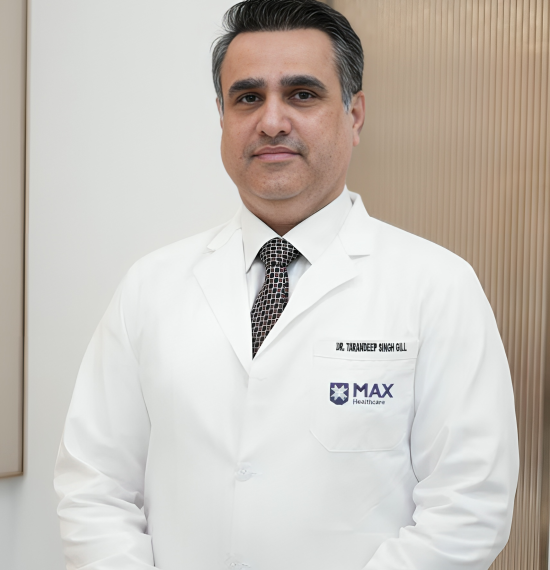
Dr Tarandeep Singh Gill
MS (Orthopaedics) | Senior Consultant — Joint Replacement & Reconstructive Surgery
Pioneer of RoboLens FT3D knee resurfacing in North India. Over 5,000 joint replacement surgeries performed. Specialist in robotic knee replacement, hip replacement, revision surgery and complex joint conditions. Practising in Chandigarh since 2004.
Clinic: Chandigarh | Book a Consultation | Full Profile →
Most patients arrive for a surgical consultation with a list of anxieties rather than a list of questions. That’s understandable — knee replacement feels like a big decision. But the consultation window is limited, and the questions that actually affect your outcome are different from the ones that first come to mind. Here are the ones worth asking.
1. Do I Actually Need This Surgery Now, or Can I Wait?
This is the first question and the most important. Knee replacement is indicated when conservative treatment has failed and the X-ray findings match the clinical picture. Not every painful knee needs replacement immediately. Ask the surgeon to explain exactly what the X-ray shows, which grade of arthritis you have, and what the consequence of waiting 6–12 months looks like in your specific case.
2. Is Partial Replacement an Option for Me?
Total knee replacement replaces the entire knee joint surface. Partial replacement — or resurfacing — addresses only the damaged compartment. If your arthritis is limited to one part of the knee (the medial, lateral, or patellofemoral compartment), partial replacement or FT3D resurfacing may be a better option. It preserves more of your natural anatomy and often has a faster recovery. Not every patient qualifies — ask specifically whether you do.
3. Will You Use a Robotic System?
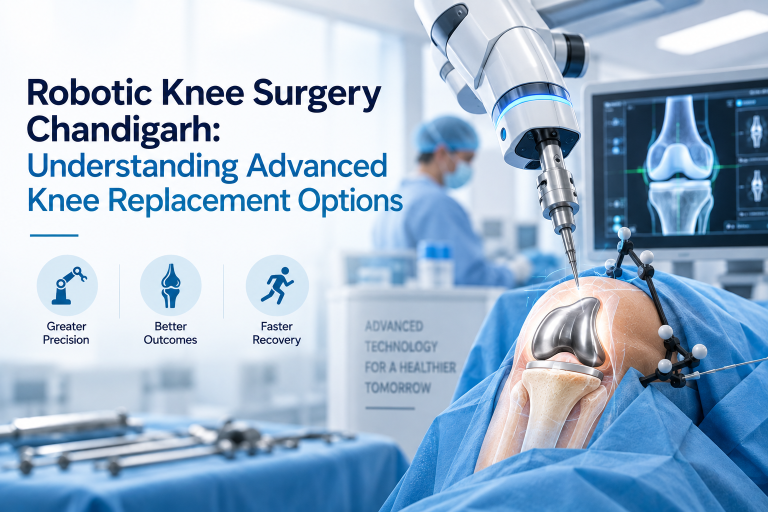
Robotic-assisted surgery improves implant alignment accuracy — and alignment directly affects how long the implant lasts and how natural it feels. If the surgeon says yes, ask which system. There’s a significant difference between systems that use a pre-operative CT scan to build a static plan (MAKO, Navio) and systems like RoboLens FT3D that map the knee in real-time during surgery. Both are better than conventional technique, but they’re not identical.
4. How Many of These Have You Done?
Volume matters in surgery. Ask how many total knee replacements the surgeon performs per year, and specifically how many robotic procedures if that’s what’s being offered. Technique refinement comes with case volume. For RoboLens FT3D, Dr TS Gill has performed over 500 robotic procedures at Max Hospital Mohali. That’s the kind of number worth asking for.
5. What Implant Will You Use and Why?
There are different implant brands and designs — Zimmer Biomet, Stryker, DePuy Synthes are among the most common. Each has different longevity data, design philosophy, and price points. Ask which brand the surgeon uses and why. Also ask whether the implant is cemented or uncemented — cemented is standard for most patients; uncemented may be used in younger patients with strong bone stock.
6. Will I Need a Blood Transfusion?
Traditional knee replacement involves significant blood loss; some patients require transfusion. Robotic surgery — particularly with RoboLens FT3D — causes less blood loss due to reduced soft tissue disruption. Ask your surgeon what the likely transfusion need is in your case, and what protocol they use to minimise it (tranexamic acid is standard in most modern centres).
7. What Anaesthesia Will Be Used?
Spinal anaesthesia is preferred for most knee replacements — it allows earlier mobilisation, reduces nausea, and avoids the risks associated with general anaesthesia. If the surgeon’s standard approach is general anaesthesia, ask why and whether spinal is an option for you. The anaesthesiologist will make the final recommendation based on your health profile, but knowing the surgeon’s standard practice is useful.
8. When Will I Walk, and When Will I Drive?
Ask for specific timelines. Same-day walking, day 2 stairs, 3-day discharge, 6-week driving clearance — these are the RoboLens FT3D benchmarks at Max Hospital Mohali. Traditional surgery centres vary. Knowing what to expect helps you plan for who will help at home, when you can return to work, and when you stop being in recovery mode.
9. What If Something Goes Wrong?
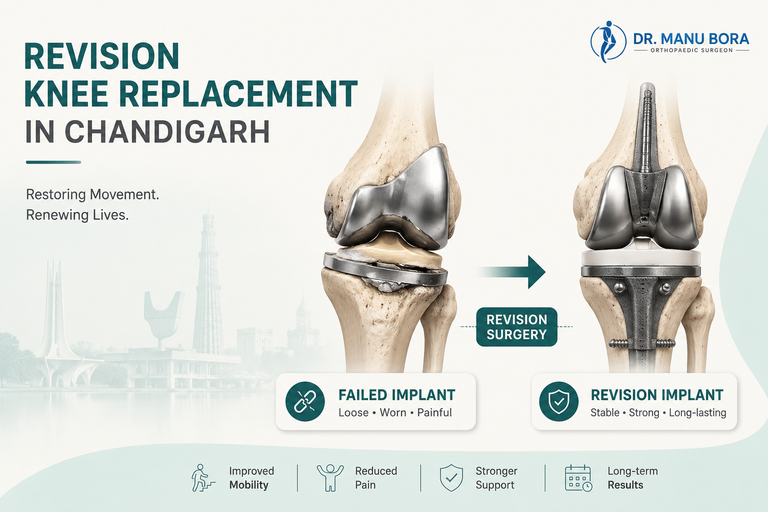
Complications in knee replacement are uncommon but not zero. DVT, infection, and implant loosening are the main risks. Ask how complications are managed at this specific hospital — whether there’s an ICU backup, what the protocol is for post-operative infection, and whether the surgeon handles revision surgery if it becomes necessary. A surgeon who is transparent about this is more reliable than one who deflects the question.
10. Will My Insurance Cover This?
Ask before you commit to a date. Most major insurance schemes cover knee replacement. The hospital billing team can verify your specific plan and handle pre-authorisation. Government schemes like CGHS, ECHS, and Ayushman Bharat are accepted at Max Hospital Mohali. For private insurance, cashless processing is available for most major insurers. Get the financial picture clear before you plan the surgery date.
If you have other questions specific to your situation, bring them to the consultation. Dr Gill takes time at the end of each first appointment to go through whatever is on the patient’s list. Book at tsgillortho.com/appointment or call +91-82880 15106.