Dr Tarandeep Singh Gill — MS Ortho, MCh Ortho
Director – Joint Replacement & Robotic Surgery · RoboLens FT3D Pioneer · Max Super Speciality Hospital, Mohali
Written & Reviewed By
Dr Tarandeep Singh Gill
MS (Orthopaedics) | Senior Consultant — Joint Replacement & Reconstructive Surgery
Pioneer of RoboLens FT3D knee resurfacing in North India. Over 5,000 joint replacement surgeries performed. Specialist in robotic knee replacement, hip replacement, revision surgery and complex joint conditions. Practising in Chandigarh since 2004.
Clinic: Chandigarh | Book a Consultation | Full Profile →
The difference between knee resurfacing and total knee replacement isn’t about which is better overall — it’s about which is right for a specific knee, at a specific stage of disease, in a specific patient. Getting that match right is what separates good outcomes from excellent ones.
What Each Procedure Does to the Joint
Total knee replacement removes the entire articulating surface of the knee — the bottom of the femur (thigh bone), the top of the tibia (shin bone), and the undersurface of the patella — and replaces them with metal and polyethylene components. Nothing of the original cartilage or bone surface remains. The result is a completely new joint surface.
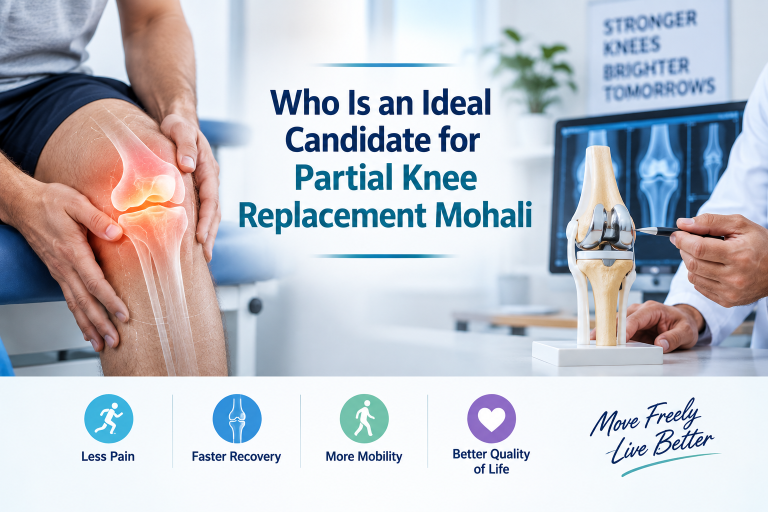
Knee resurfacing — and FT3D resurfacing specifically — is more conservative. Instead of removing the whole surface, only the damaged areas are resurfaced. The rest of the joint structure is left intact. Cruciate ligaments are preserved. Bone stock is conserved. The joint is more like itself after the procedure than after total replacement.
FT3D resurfacing, developed by Dr TS Gill, uses real-time robotic guidance during surgery to ensure precise fit of the resurfaced areas. No pre-operative CT scan is needed — the system maps the joint live, during the procedure. This is important because resurfacing has less tolerance for implant positioning error than total replacement. Precision matters more, not less.
When Resurfacing Is the Right Choice
Resurfacing is appropriate when damage is isolated — one or two compartments of the knee affected while the remaining cartilage is viable. The cruciate ligaments need to be intact and functional. Deformity should be mild to moderate and correctable. Bone quality must be sufficient to support the resurfaced components.
Younger patients — those in their 40s and 50s — are the group where resurfacing makes most strategic sense. They have stronger bone, more to gain from preserving native joint anatomy, and a longer expected demand on the implant. A 48-year-old who has resurfacing with FT3D and achieves 15–20 years of good function has bought the time needed for the next generation of implant technology. A total replacement at 48 is likely to need revision at 65–70.
When Total Replacement Is the Right Choice
Total replacement is indicated when all three compartments are damaged, when the arthritis is inflammatory (rheumatoid), when deformity is severe, or when bone quality is poor. Patients in their late 60s and 70s with Grade 4 pan-compartmental osteoarthritis are the classical total replacement candidates.
If the cruciate ligaments are damaged or already sacrificed, total replacement is also the right choice — the ligaments are part of why resurfacing works so well when they’re intact.
The Recovery Difference
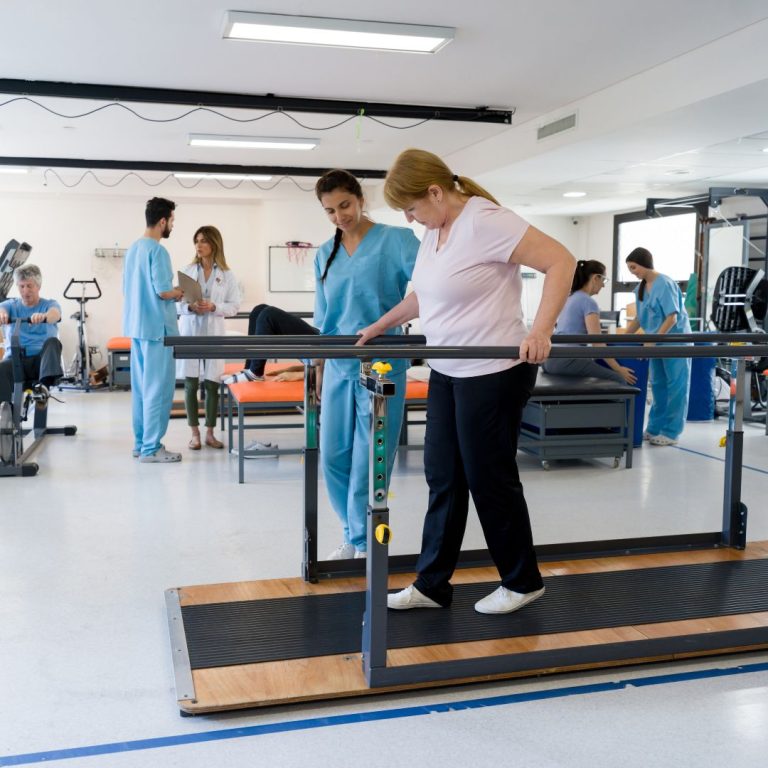
Resurfacing recovery is faster. Less bone removed means less trauma, less swelling, and earlier return to normal gait. Most FT3D resurfacing patients are out of hospital in 2–3 days, walking without aids in 3–4 weeks, and back to full activity in 4–8 weeks. Total replacement takes 3–6 months to the same functional point.
The feel of the knee is also different. Because more of the native structure is preserved, resurfaced knees tend to feel more natural — less mechanical, less of the “artificial joint” quality that some total replacement patients describe. That’s not universal, but it’s consistent enough to be worth noting.
The starting point for understanding which procedure applies to your knee is a proper assessment — standing weight-bearing X-ray, MRI in some cases, and a consultation with a surgeon who performs both procedures and will recommend the one that’s right, not the one that’s simpler or more lucrative. Dr Gill performs both at Max Hospital Mohali. Call +91-82880 15106 to book an assessment.