Dr Tarandeep Singh Gill — MS Ortho, MCh Ortho
Director – Joint Replacement & Robotic Surgery · RoboLens FT3D Pioneer · Max Super Speciality Hospital, Mohali
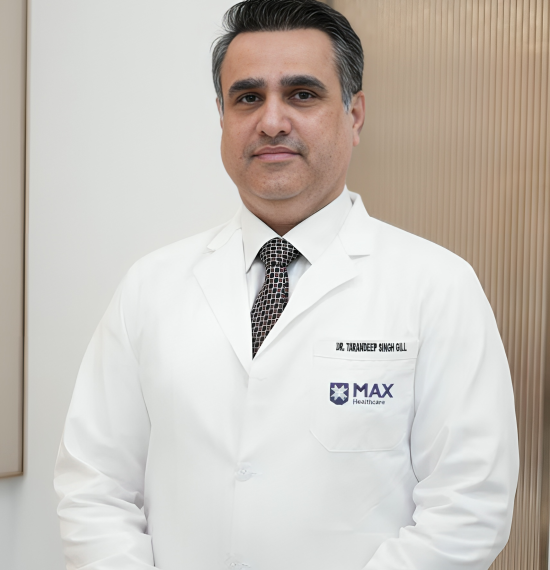
Written & Reviewed By
Dr Tarandeep Singh Gill
MS (Orthopaedics) | Senior Consultant — Joint Replacement & Reconstructive Surgery
Pioneer of RoboLens FT3D knee resurfacing in North India. Over 5,000 joint replacement surgeries performed. Specialist in robotic knee replacement, hip replacement, revision surgery and complex joint conditions. Practising in Chandigarh since 2004.
Clinic: Chandigarh | Book a Consultation | Full Profile →
The recovery question comes up in every pre-surgical consultation. Patients want to know about pain, about walking, about stairs, about when they can drive, and about when they stop feeling like a patient. The answers are more specific than most guides suggest — and they vary based on what was done, not just how long it’s been.
Day of Surgery
Surgery takes 60–90 minutes under spinal anaesthesia. No general anaesthesia, no epidural. The spinal wears off over 4–6 hours. As the feeling returns to your legs, the physiotherapist will help you stand at the bedside — usually within 4–6 hours of surgery. That first stand is often the moment patients realise the knee they’ve been dreading surgery on is actually doing something useful again. The pain is different from the arthritic pain they came in with.
The same day, you’ll take a few steps with a walker. Don’t expect to feel confident — that’s not the point at this stage. The goal is to get the joint moving early, before swelling stiffens things up.
Days 1–3: The Hospital Phase
Day 1 post-surgery is about managing the transition. Swelling peaks at around 24–48 hours. The physiotherapist will guide exercises — ankle pumps, quad sets, straight leg raises — that reduce clot risk and maintain circulation without stressing the new joint. Walking with a frame or crutches becomes more confident.
Day 2 is usually when stairs happen. Most patients manage a few steps up and down with supervision and a handrail. This is specifically assessed before discharge — you need to be safe on stairs at home before you leave the hospital.
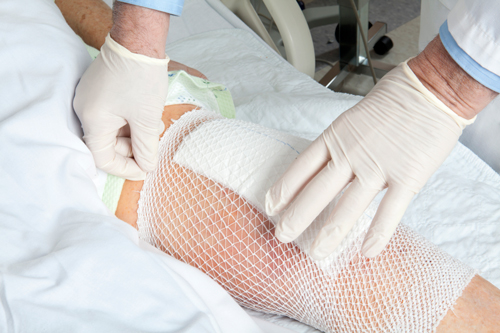
Day 3 is the typical discharge point for uncomplicated robotic knee replacement. You go home with a walker, a wound dressing, pain medication, and specific exercise instructions. Bilateral replacement (both knees) sometimes means an extra day or two.
Weeks 1–2: Home Recovery
The first week at home is the most uncomfortable. The knee is swollen, the thigh is bruised, and the exercises — however simple they look — feel genuinely effortful. This is normal. The discomfort is tissue healing, not something going wrong.
Keep the leg elevated when resting. Ice (wrapped in cloth, 20 minutes on, 20 off) reduces swelling meaningfully in the first two weeks. Take the prescribed pain medication on schedule, not just when it gets bad — staying ahead of pain makes the exercises easier, which makes recovery faster.
The 2-week mark is the first follow-up with Dr Gill. Wound review, suture or staple removal if applicable, and assessment of range of motion. By this point most patients are walking with one crutch or a stick and managing around the house independently.
Weeks 3–6: Building Strength and Bend
Walking distance increases. Short walks outside — 5 minutes, then 10, then 20 — become possible. The goal for range of motion is 90 degrees of knee bend by 6 weeks. Most patients hit this without much difficulty; a few need extra physiotherapy sessions to achieve it if they started with very stiff knees.
Driving becomes possible around week 4–6 for left knee replacement (in automatic vehicles), and week 6–8 for right knee. The test is whether your reflex response — emergency braking — is fast enough. Dr Gill confirms clearance at the 6-week review.
The 6-week appointment assesses function, range of motion, and whether the healing is on track. Most patients at this stage are walking without aids, managing stairs independently, and finding the knee increasingly integrated into normal movement rather than something they’re consciously protecting.
Months 3–12: The Long Arc
The 3-month mark is when most patients feel like themselves again. The swelling has largely resolved, the gait has normalised, and the knee has stopped dominating every thought. Day-to-day activities — shopping, cooking, driving, attending events — are back without much modification.
Full strength recovery continues to 6–12 months. Walking distance keeps improving. The knee keeps feeling more natural. Patients who did consistent physiotherapy through this period generally have better range of motion and strength than those who stopped at 6 weeks. That part is worth knowing upfront.
At 1 year, most patients have forgotten what their pre-surgery knee felt like on a daily basis. That’s usually the goal.