Dr Tarandeep Singh Gill — MS Ortho, MCh Ortho
Director – Joint Replacement & Robotic Surgery · RoboLens FT3D Pioneer · Max Super Speciality Hospital, Mohali
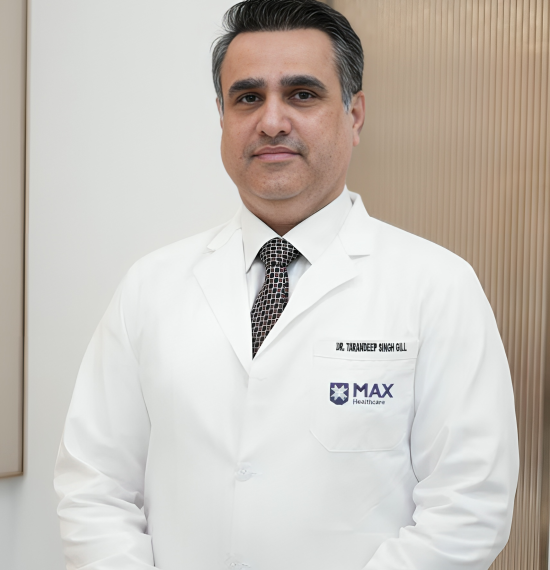
Written & Reviewed By
Dr Tarandeep Singh Gill
MS (Orthopaedics) | Senior Consultant — Joint Replacement & Reconstructive Surgery
Pioneer of RoboLens FT3D knee resurfacing in North India. Over 5,000 joint replacement surgeries performed. Specialist in robotic knee replacement, hip replacement, revision surgery and complex joint conditions. Practising in Chandigarh since 2004.
Clinic: Chandigarh | Book a Consultation | Full Profile →
Walk into almost any orthopaedic clinic in Chandigarh and ask about robotic knee surgery, and you’ll get one of two responses. Either a blank stare — because most centres don’t offer it — or a slick brochure with the word “robotic” printed in large font and very little actual explanation of what that means. Most patients leave more confused than when they arrived.
So here’s a plain explanation. No marketing language.
Why Standard Knee Replacement Has a Precision Problem
Traditional knee replacement surgery has helped millions of people. The technique is well-established, and most surgeons who do it regularly get good results. But here’s something that doesn’t get discussed much: even in experienced hands, conventional surgery relies on bone-cutting guides and the surgeon’s eye for alignment. The measurements come from X-rays taken before the operation and from visual assessment during surgery.
The problem is that no two knees are the same. The geometry, the deformity angle, the bone density — it all varies. And when you’re cutting bone by hand, even a 2–3 degree error in implant alignment can shorten its lifespan by years, or produce a knee that never quite feels natural. Patients notice. They describe it as “stiff,” or “not like my own knee,” or “good but not great.” That’s usually alignment.
Robotic systems exist to close that gap between “usually good” and “reliably precise.”
What RoboLens FT3D Actually Is
FT3D stands for Fluoroscopy-Tracked Three-Dimensional. The system uses real-time intraoperative imaging to build a live map of your knee’s actual geometry during surgery — not from a scan taken a week earlier.
This matters more than it sounds. Most other robotic knee systems require a CT scan 2–4 weeks before surgery. That scan feeds a 3D model into the robot’s planning software, and surgery follows that pre-built plan. The issue: your knee on the operating table is not exactly the same as your knee in the CT scanner. Swelling changes, positioning changes, and anatomical variation between lying down and standing can all shift the geometry. The robot is working from a map of the past, not the present.
RoboLens FT3D skips that problem entirely. As Dr Gill operates, the system tracks the surgical instruments in real-time relative to your actual knee structure. Before any bone is cut, the system calculates exactly where to make each cut and by how much. If the plan needs adjusting — because what the surgeon finds during surgery differs from what was expected — it adjusts live. That’s the difference between following a script and reading the room.
What This Means for You as a Patient
More natural-feeling knee. That’s the headline. When the implant is placed with sub-millimetre precision and the alignment matches your anatomy exactly, the knee moves the way your own joint did — not like a mechanical replacement.
Faster early recovery. Because the surgery is more precise, there’s less collateral disturbance to surrounding bone and soft tissue. Less trauma means less swelling, less post-operative pain, and earlier mobilisation. Most RoboLens FT3D patients are up and walking the same day. That’s not a claim — it’s the direct result of less tissue disruption.
Longer implant lifespan. A well-aligned implant wears evenly. An implant placed 3 degrees off-axis wears unevenly and is more likely to need revision surgery in 12–15 years rather than 20–25. For a patient in their 50s, that’s the difference between one surgery in a lifetime and two. The precision of FT3D directly affects this calculation.
No CT scan required. This isn’t a minor point — skipping the pre-operative CT scan reduces radiation exposure, eliminates one step in the pre-surgery workup, and removes the time gap between planning and execution. The system maps your knee fresh, on the day, in real-time.
Who Is It For?
Most patients who need knee replacement are suitable candidates for the robotic approach. But RoboLens FT3D is particularly well-matched for certain situations.
Younger, active patients — those in their 40s and 50s who still want to walk long distances, travel, stay physically active — benefit most from the extended implant lifespan. For them, the precision isn’t a luxury; it directly affects how many surgeries they’ll need in their lifetime.
Patients with unusual anatomy — previous fractures, deformities, or knees that have been through multiple prior surgeries — benefit from the real-time mapping. Pre-built CT-based plans often struggle with unusual cases. Real-time imaging doesn’t have that problem.
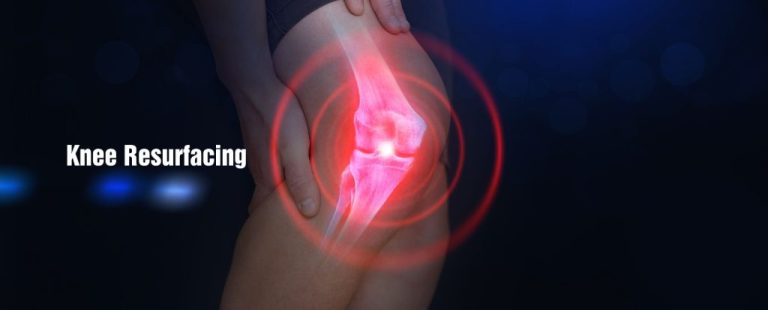
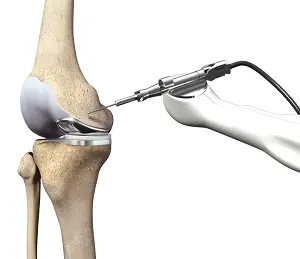
Patients considering partial knee replacement (where only one compartment of the knee is resurfaced) also benefit significantly. Partial replacement has a narrower tolerance for implant positioning error than total replacement — the precision of FT3D makes a meaningful difference here.
Where Is RoboLens FT3D Available in Chandigarh?
Dr TS Gill is the pioneer of RoboLens FT3D in North India and performs the procedure at Max Super Speciality Hospital, Phase 6 (Sector 56), Mohali — which for Chandigarh patients is a 10–15 minute drive.
He has performed over 500 robotic procedures using this system and has been practising in the tricity since 2004. The first consultation is an X-ray review and physical examination — about 45 minutes. Not every patient who comes in ends up needing replacement. Some are better served by injections or resurfacing. Dr Gill will tell you which applies to your situation.
Frequently Asked Questions
Related Reading
Related Pages
Cost, candidacy, comparison with standard robotic surgery, and step-by-step procedure details.
Serving Chandigarh patients at Max Super Speciality Hospital, Mohali — 10 minutes from central Chandigarh.