Dr Tarandeep Singh Gill — MS Ortho, MCh Ortho
Director – Joint Replacement & Robotic Surgery · RoboLens FT3D Pioneer · Max Super Speciality Hospital, Mohali
RoboLens FT3D is the name for Dr TS Gill’s robotic knee resurfacing system — both the technology and the surgical technique. The two are inseparable: FT3D is how Dr Gill operates, and RoboLens is the guidance system that makes it possible. Here is a clear explanation of what each part means.
RoboLens — The Guidance System
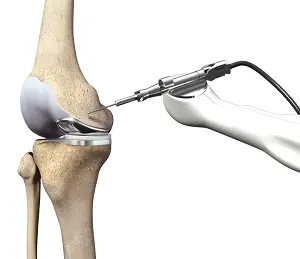
RoboLens is the intraoperative imaging and tracking component. During surgery, it acquires live fluoroscopic images of the knee from multiple angles and processes them into a real-time 3D model. This model is continuously updated as the surgery progresses, giving Dr Gill a live map of the joint geometry as he operates.
The system tracks the position of surgical instruments relative to the bone in real-time. Before any cut is made, the surgeon sees exactly where the instrument is, what angle it’s at, and what the cut will produce in terms of implant positioning. The planning is confirmed before execution — not assumed before the patient enters the room.
FT3D — The Technique
FT3D stands for Fluoroscopy-Tracked Three-Dimensional. It describes the surgical method: using fluoroscopic tracking (live X-ray imaging) to build a three-dimensional model of the knee’s actual anatomy in real-time. This is the key technical innovation — rather than relying on a CT scan taken days or weeks before surgery, the system maps the joint as it is at the moment of surgery.
The technique was developed by Dr Gill from years of observing the limitations of pre-operative CT-based planning in complex deformed knees. The gap between what a CT scan predicts about the anatomy and what the surgeon finds when operating is small in straightforward cases but can be clinically significant in severe deformity. FT3D closes that gap by eliminating the pre-operative prediction step entirely.
What It Means for the Patient
No CT scan before surgery. Less radiation exposure. Simpler pre-operative workup. Real-time adaptability to what the surgeon finds.
Precise implant positioning — the components are placed where the anatomy requires them, not where a pre-built plan specified. This directly affects implant longevity and how natural the knee feels in the years following surgery.
Faster recovery — because resurfacing preserves more native joint anatomy than total replacement, the recovery is shorter. Most patients are home in 3 days and walking without aids in 3–4 weeks.
Dr TS Gill performs RoboLens FT3D at Max Super Speciality Hospital, Phase 6 (Sector 56), Mohali. He is the pioneer of this technique in North India with over 500 procedures performed. Consultations are available at tsgillortho.com/appointment or by calling +91-82880 15106.