Dr Tarandeep Singh Gill — MS Ortho, MCh Ortho
Director – Joint Replacement & Robotic Surgery · RoboLens FT3D Pioneer · Max Super Speciality Hospital, Mohali

Written & Reviewed By
Dr Tarandeep Singh Gill
MS (Orthopaedics) | Senior Consultant — Joint Replacement & Reconstructive Surgery
Pioneer of RoboLens FT3D knee resurfacing in North India. Over 5,000 joint replacement surgeries performed. Specialist in robotic knee replacement, hip replacement, revision surgery and complex joint conditions. Practising in Chandigarh since 2004.
Clinic: Chandigarh | Book a Consultation | Full Profile →
The phrase “knee replacement” carries a certain weight — it implies the whole joint. But for a significant number of patients, a full replacement isn’t what’s needed. If the damage is limited to one part of the knee, treating only that part is often more appropriate, faster to recover from, and produces a more natural-feeling result.
What Partial Knee Replacement Actually Is
The knee has three compartments — medial (inner side), lateral (outer side), and patellofemoral (kneecap and the groove it runs in). Osteoarthritis doesn’t always affect all three equally. When damage is concentrated in one compartment while the other surfaces remain intact, replacing only the damaged area makes more sense than replacing everything.
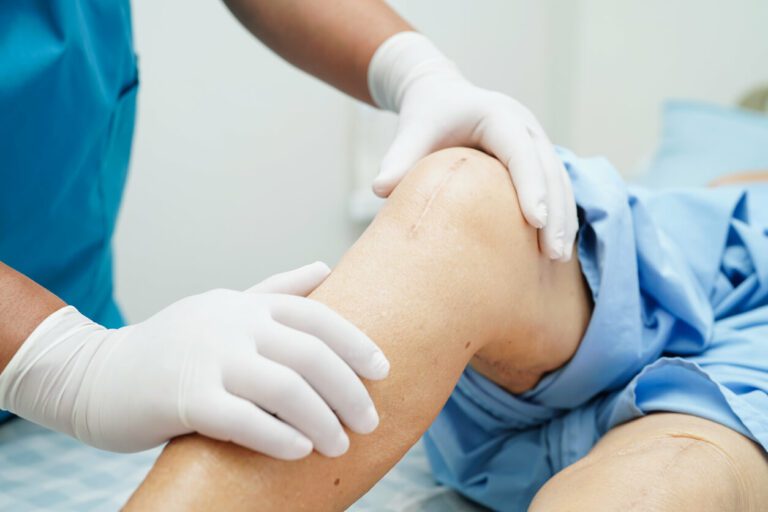
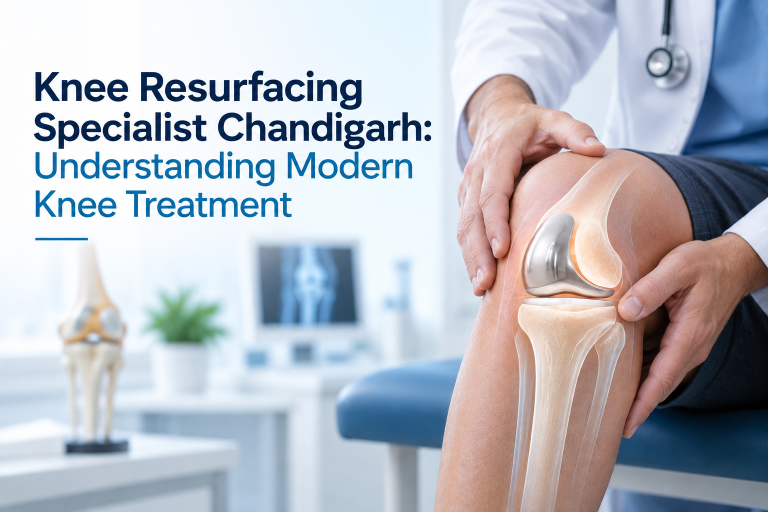
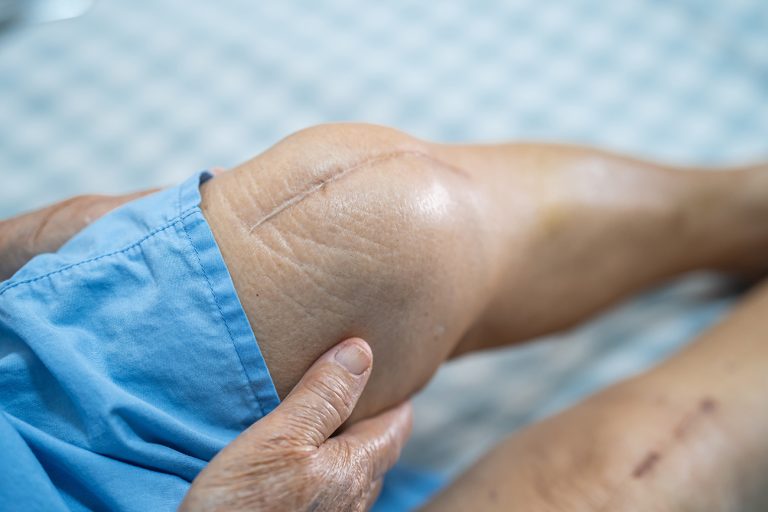
Partial knee replacement — technically called unicompartmental knee arthroplasty for medial or lateral disease — is a smaller procedure than total replacement. The incision is shorter, the bone removal is more limited, and the cruciate ligaments are preserved. The result is a knee that still has most of its original structure, with only the damaged surface replaced.
FT3D knee resurfacing, the technique developed by Dr TS Gill, applies specifically to this concept. Rather than cutting and replacing the full joint, the system resurfaces only the damaged areas with real-time robotic guidance, achieving precise fit without a pre-operative CT scan.
Who Is Actually a Candidate?
Partial replacement is not for everyone with knee pain. It’s most appropriate for patients with isolated single-compartment arthritis, intact cruciate ligaments (confirmed on MRI), and a stable, correctable deformity. Patients with inflammatory arthritis (rheumatoid) affecting multiple compartments, or with severe fixed deformity, are generally better served by total replacement.
Age plays a role here — partial replacement is particularly well-suited to patients under 65 who are active and want to preserve as much natural joint anatomy as possible. The less bone removed, the better the options if revision surgery is ever needed in the future.
The definitive answer comes from a standing weight-bearing X-ray and MRI. These images will show exactly which compartments are damaged and whether the prerequisites for partial replacement are met. Dr Gill assesses this during the consultation — he won’t offer partial replacement if the imaging doesn’t support it, and won’t push full replacement if partial is appropriate.
How Recovery Differs from Total Replacement
Partial replacement recovery is faster. The smaller incision means less trauma. The preserved ligaments mean better proprioception (the knee’s sense of its own position) from day one. Most partial replacement patients are walking without aids in 3–4 weeks and return to normal daily activities in 4–6 weeks rather than the 6–12 of total replacement.
The knee feels more natural, typically, than after total replacement. The reason is that the native joint architecture — cruciates, the other compartment’s surfaces — is preserved. There’s less of the “slightly artificial” quality that some total replacement patients describe at the end of a long day.
The Question of Longevity
Partial replacement is sometimes presented as a temporary solution before total replacement. This reputation is based on older data from conventional partial replacement without robotic assistance. With robotic systems like RoboLens FT3D, alignment accuracy in partial replacement has improved significantly — and 10–15 year survival rates for well-placed partial implants are now comparable to total replacement in appropriately selected patients.
The key phrase is “appropriately selected.” Partial replacement in a patient who should have had total replacement fails earlier. That’s not a problem with the technique — it’s a selection error. This is why the pre-operative assessment matters as much as the surgery itself.
If you’re in Chandigarh or Mohali and wondering whether your knee is a candidate for partial rather than total replacement, the starting point is a consultation with imaging. Dr Gill’s clinic is at Max Super Speciality Hospital, Phase 6, Mohali. New appointments available within a week — call +91-82880 15106 to book.