Dr Tarandeep Singh Gill — MS Ortho, MCh Ortho
Director – Joint Replacement & Robotic Surgery · RoboLens FT3D Pioneer · Max Super Speciality Hospital, Mohali
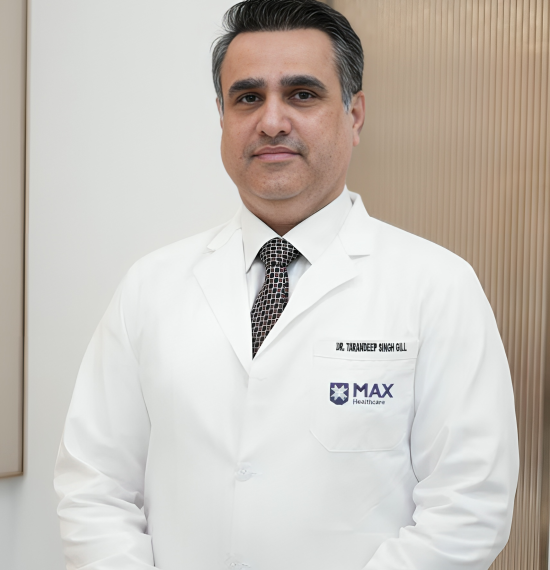
Written & Reviewed By
Dr Tarandeep Singh Gill
MS (Orthopaedics) | Senior Consultant — Joint Replacement & Reconstructive Surgery
Pioneer of RoboLens FT3D knee resurfacing in North India. Over 5,000 joint replacement surgeries performed. Specialist in robotic knee replacement, hip replacement, revision surgery and complex joint conditions. Practising in Chandigarh since 2004.
Clinic: Chandigarh | Book a Consultation | Full Profile →
The patients who come in with the most difficult recoveries are often not the oldest or the least fit. They’re the ones who waited. Knee replacement at Grade 4 arthritis, after years of managing on maximum dose anti-inflammatories, with quadricep muscles that have significantly wasted from disuse — that’s a harder recovery than the same procedure done two years earlier with better muscle baseline.
Delay has costs that don’t get talked about enough.
Why People Put It Off
Fear of surgery is the most common reason and the most understandable. Knee replacement is major surgery. The thought of anaesthesia, a hospital stay, weeks of recovery, and the possibility of things going wrong is genuinely daunting. Patients put it off in the hope that the pain will improve, that some new treatment will emerge, or simply because the day-to-day is still manageable if they don’t push themselves.
The second reason is the belief that they’re too young. There’s a widespread assumption — sometimes reinforced by well-meaning doctors — that knee replacement should be delayed until the patient is “old enough” that the implant will last their lifetime without revision. This reasoning was more valid 20 years ago when implant lifespans were shorter. Modern implants, especially with robotic precision placement, routinely last 20–25 years. A patient who has replacement at 55 is likely to get one very good lifetime of use from it.
A third reason: the injections are still working, sort of. Viscosupplementation and steroid injections can provide meaningful pain relief at Grade 3 arthritis. Patients cycle through injection courses and convince themselves the underlying condition isn’t progressing as long as they’re getting some relief. The relief is real. The progression continues anyway.
What Happens When You Wait Too Long
Muscle wasting is the most significant consequence. When a knee hurts, the natural response is to use it less — shorter walks, avoid stairs, stop standing for long periods. The quadriceps and hamstrings weaken progressively. By the time some patients arrive for surgery, the thigh muscle on the affected side is visibly smaller than the other. Strong muscles are what power a fast recovery. Weak muscles make the rehabilitation phase longer and harder.
Bone quality deteriorates. The stress-shielding that occurs when a joint is significantly damaged can lead to bone loss around the joint over time. More bone loss means a more complex reconstruction, less predictable implant fixation, and sometimes the need for augmented or revision-grade implants rather than standard ones.
The deformity progresses. A mild bow-leg at Grade 3 becomes a severe bow-leg at Grade 4. Correcting severe fixed deformity during total knee replacement is more technically demanding and carries higher complication risk than correcting moderate deformity. The surgery gets harder the longer it’s delayed.
Long-term NSAID use carries its own risks: gastric ulcers, kidney function decline, cardiovascular effects. Patients who take diclofenac or similar drugs daily for 2–3 years to delay surgery are not avoiding harm — they’re trading joint harm for systemic harm.
When Is the Right Time?
The right time is when conservative treatment has genuinely been tried and has stopped providing meaningful relief — and when the X-ray findings match the clinical picture. Not when the pain is at its absolute worst, which is usually too late for an ideal outcome. Not “in a few more years,” which is usually a rationalisation rather than a medical assessment.
The way to know is a proper assessment with a standing weight-bearing X-ray and a direct conversation with a surgeon who will tell you honestly what the imaging shows. Dr Gill’s consultation at Max Hospital Mohali does exactly that. If surgery isn’t indicated yet, he’ll tell you. If it is, he’ll explain why. Call +91-82880 15106 or book at tsgillortho.com/appointment.