Travelling to Chandigarh for FT3D Knee Resurfacing — What Out-of-City Patients Need to Know

Travelling to Chandigarh for FT3D Knee Resurfacing: A Complete Guide for Out-of-City Patients

Every year, patients from across North India make the journey to Chandigarh and Mohali for one specific reason: to consult Dr TS Gill, the founder of the FT3D knee resurfacing technique. They come from Delhi, Ludhiana, Ambala, Shimla, Jammu, and dozens of smaller towns spread across Punjab, Haryana, and Himachal Pradesh. Many have already seen surgeons closer to home and been told their options are limited — that their knee is “not bad enough” for a full replacement but too damaged to leave untreated. If that sounds familiar, you are not alone. Robotic knee replacement in Chandigarh, specifically the FT3D technique offered at Max Super Speciality Hospital robotic knee replacement, Mohali, has become a genuine destination for patients who have been underserved by the available options in their own cities. This guide explains exactly what the journey looks like — from your first remote enquiry through to returning home after surgery.

Why Patients Travel Specifically for FT3D Knee Resurfacing

RoboLens FT3D (Full-Thickness Three-Dimensional) knee resurfacing is not available across the country. It is currently performed exclusively at Max Super Speciality Hospital, Mohali — the centre where Dr TS Gill, the procedure’s founder, operates. There is no other facility in North India offering this technique, which means patients who are suitable candidates for FT3D have one destination.

Most out-of-city patients arrive after one of two journeys. Either they researched robotic knee replacement in Chandigarh extensively online and discovered Dr Gill’s work through that search, or they were referred directly by a local orthopaedic surgeon who recognised that FT3D was the appropriate solution but was not performing it himself. Both pathways are equally valid, and both result in patients who are well-informed about why they are making the trip.

What Makes FT3D Different from Standard Robotic Knee Replacement?

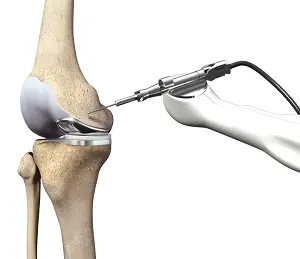
FT3D knee resurfacing is a tissue-preserving approach. Rather than removing the entire knee joint and replacing it with a full implant — as in a traditional total knee replacement — FT3D targets only the damaged cartilage and bone surfaces responsible for the patient’s pain. The healthy structures of the knee, including ligaments, bone stock, and the surrounding joint anatomy, are preserved wherever possible. Robotic precision, delivered through the RoboLens system, allows Dr Gill to plan and execute the resurfacing with an accuracy that manual surgery cannot reliably replicate. The result, for suitable candidates, is a more natural-feeling knee and a significantly faster recovery compared to conventional total knee replacement.

The Initial Consultation: Does It Have to Be In Person?

For out-of-city patients, the process usually begins remotely. A preliminary conversation can take place by phone or video, and patients are encouraged to send their existing X-rays ahead of time. This allows Dr Gill’s team to give an early indication of whether FT3D is likely to be appropriate for the specific pattern of damage in that patient’s knee. This step is genuinely useful — it avoids the situation where a patient travels a considerable distance only to be told at consultation that the procedure is not the right fit for their case.

What Happens at the In-Person Consultation?

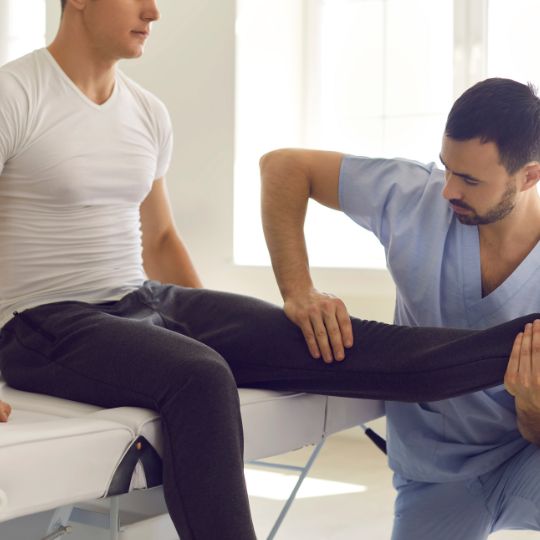
If the remote review suggests that FT3D may be suitable, an in-person consultation is scheduled at Max Super Speciality Hospital, Mohali. This appointment involves a thorough clinical examination of the knee — an assessment that cannot be replicated through a screen. Dr Gill will evaluate range of motion, alignment, ligament stability, and the specific location and severity of cartilage wear. Following the examination, there is a direct discussion of the surgical plan, what the patient can realistically expect from recovery, the timeline for returning to normal activities, and any questions the patient or their family wish to raise. Most patients find this visit straightforward and treat it as a day trip.

How Many Trips to Chandigarh Will You Need?

For the majority of out-of-city patients, the full process involves two main trips to the Chandigarh-Mohali area:

  1. The Consultation Visit: Clinical examination, imaging review, suitability assessment, and surgical planning. This is typically completed in a single day. Patients travelling from Shimla, Jammu, or Delhi often drive or take the train, complete their appointment, and return the same evening.
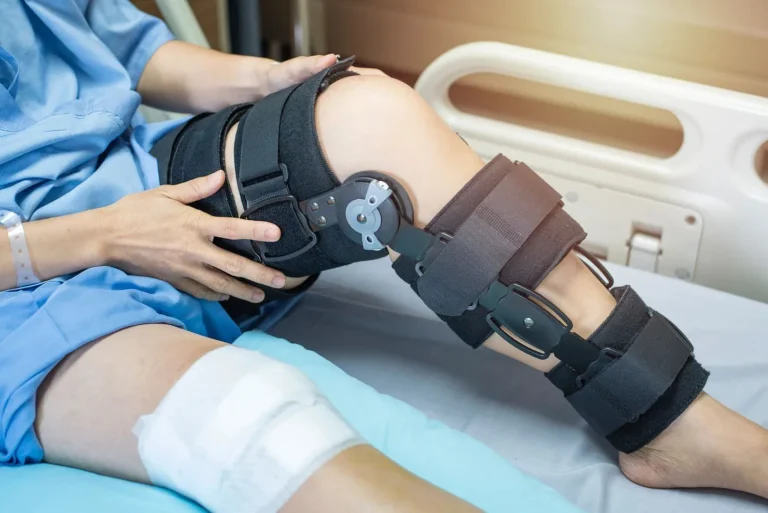
  2. The Surgery Visit: This involves the procedure itself, a short post-operative hospital stay, and discharge once the clinical team is satisfied with the patient’s recovery. Most FT3D patients are mobile and bearing weight within 24 hours of surgery.

What About Follow-Up After You Return Home?

Follow-up care is structured to be as manageable as possible for patients living outside the Tricity region. Many patients combine one or two in-person review visits to Mohali with regular remote check-ins with Dr Gill’s team. Physiotherapy — which plays an important role in FT3D recovery — is arranged in the patient’s home city, with Dr Gill’s team providing a clear protocol that a local physiotherapist can follow. Patients are never left without guidance simply because they live at a distance.

Hospital Stay and Practical Arrangements

How Long Will You Be in Hospital?

FT3D knee resurfacing is a targeted, tissue-preserving procedure, and the hospital stay reflects this. Most patients remain at Max Super Speciality Hospital for two to three nights. During this period, the clinical focus is on effective pain management, early mobilisation, wound monitoring, and confirming that the knee is responding as expected before discharge. The goal is to have patients comfortable, mobile, and confident in their initial exercises before they leave the ward.

Accommodation and Local Arrangements

Patients travelling from outside the Tricity region typically arrange accommodation in Chandigarh or Mohali for themselves and the family member accompanying them. The areas immediately surrounding Max Super Speciality Hospital offer a range of hotel and guesthouse options to suit different budgets. Dr Gill’s team is familiar with the needs of out-of-city patients and can advise on practical local arrangements when needed. Planning for approximately five to seven days in the area — covering the hospital stay plus a buffer period before travelling home — is a sensible approach for most patients.

Getting to Max Super Speciality Hospital, Mohali

Max Super Speciality Hospital is located in Mohali, directly adjacent to Chandigarh and easily accessible from across the region. Patients considering robotic knee replacement in Chandigarh will find the hospital straightforward to reach by multiple routes.

  • By road: Mohali is well connected to Delhi (approximately 250 km via NH-44), Ludhiana (approximately 95 km), Shimla (approximately 115 km), and Jammu (approximately 300 km). The road network is generally reliable, and many patients travel by private car or taxi.
  • By train: Chandigarh railway station is the nearest major rail hub, with frequent services from Delhi, Ludhiana, Ambala, and other cities across North India. The hospital is reachable from the station by taxi or auto-rickshaw.
  • By air: Chandigarh International Airport (Shaheed Bhagat Singh Airport) serves flights from major Indian cities including Delhi, Mumbai, and Bengaluru. The hospital is approximately 20–30 minutes from the airport by road.

For patients who require assistance with transport planning, Dr Gill’s administrative team can provide guidance on the most practical route from your location.

Is Travelling for Robotic Knee Replacement Worth It?

It is a fair question. Travelling for surgery requires planning, cost, and time away from home. But for patients whose local options have been limited — whether because of their age, the pattern of their knee damage, or the absence of specialist robotic knee replacement in Chandigarh-level expertise in their own city — the decision usually becomes clear once they understand what FT3D actually offers. A procedure that preserves more of your natural knee, gets you mobile faster, and is performed by the surgeon who developed the technique is not a minor distinction. Patients who have made this journey consistently report that the logistics were far less daunting than they anticipated.


Frequently Asked Questions

Can I have my initial consultation with Dr Gill online before travelling to Chandigarh?

Yes. A preliminary remote consultation by phone or video is available for out-of-city patients. If you send your X-rays in advance, Dr Gill’s team can review your imaging and give you an initial indication of whether FT3D is likely to be suitable for your knee. This helps ensure that your in-person visit is purposeful and that you are not travelling unnecessarily. If the remote review suggests you are a potential candidate, an in-person clinical examination will then be arranged at Max Super Speciality Hospital, Mohali.

How soon after FT3D surgery will I be able to travel home?

Most FT3D patients are mobile and walking with support within 24 hours of surgery. The hospital stay is typically two to three nights. After discharge, a short period of rest in the Chandigarh-Mohali area is generally advisable before undertaking a longer journey home. For most patients, travelling home by car or train approximately five to seven days after the procedure is realistic, depending on the distance and individual recovery. Dr Gill’s team will assess each patient individually and give clear guidance on when travel is appropriate.

Will I need to return to Chandigarh for every follow-up appointment?

Not necessarily. Dr Gill’s team structures follow-up care with out-of-city patients in mind. Many patients manage their recovery through a combination of one or two in-person review visits to Mohali — particularly in the early weeks — and regular remote check-ins thereafter. Physiotherapy is coordinated with a qualified physiotherapist in your home city, using a protocol provided by Dr Gill’s team. You will not be without clinical oversight simply because you live at a distance.


Take the First Step Towards a Better Knee

If you have been living with knee pain and feel that the options presented to you so far have not been the right fit, robotic knee replacement in Chandigarh — specifically the FT3D technique offered by Dr TS Gill — may be worth exploring. The first step costs nothing more than a conversation. Send your X-rays, schedule a remote consultation, and find out whether FT3D is appropriate for your knee before making any decisions about travel or treatment.

Contact Dr TS Gill’s team at Max Super Speciality Hospital, Mohali, to arrange your initial consultation — in person or remotely. Patients travel from across North India for this procedure. The process is more straightforward than you may expect, and the clinical team is experienced in supporting patients who are making this journey for the first time.

Full guide to RoboLens FT3D Knee Resurfacing
Book a Consultation with Dr TS Gill

Similar Posts

Leave a Reply

Your email address will not be published. Required fields are marked *