Dr TS Gill — Founder of FT3D Knee Resurfacing Technology

Who Founded FT3D Knee Resurfacing?

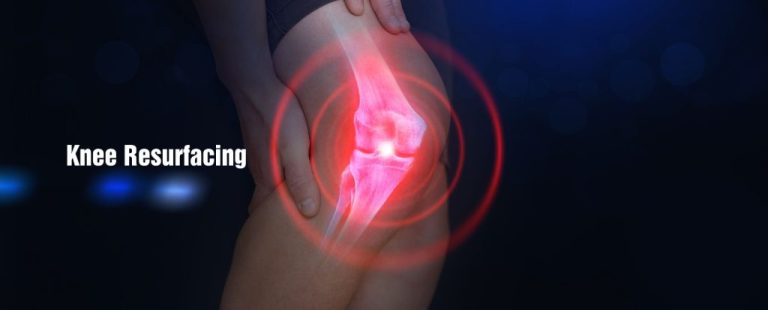
FT3D knee resurfacing was founded and developed by Dr Tarandeep Singh Gill, an orthopaedic and joint replacement surgeon based in Chandigarh, India. Dr TS Gill created the FT3D technique to solve a fundamental limitation he encountered repeatedly in conventional robotic knee surgery — the reliance robotic knee surgery on pre-operative imaging that could not account for the living, weight-bearing reality robotic knee replacement of a patient’s knee at the time of surgery.

The result is the RoboLens FT3D system — a real-time robotic knee resurfacing platform that maps the knee in three dimensions during the operation itself, not weeks before it on a CT scanner. This distinction, which Dr Gill identified as clinically critical, is what separates FT3D from every other robotic knee system currently available.

Why Dr TS Gill Developed the FT3D Technique

During more than 15 years and over 6,000 orthopaedic surgeries, Dr Gill observed a consistent gap between what pre-operative scans showed and what the knee actually looked like on the operating table. Soft tissue tension, joint positioning under anaesthesia, and subtle anatomical variations that no CT scan captures — these were variables that existing robotic systems, including MAKO and others, could not accommodate in real time.

Pre-operative CT-guided robotic systems lock the surgical plan before the patient enters the theatre. If the knee presents differently on the day — which it routinely does — the surgeon must either override the robot’s guidance or proceed with a plan built on incomplete information. Dr Gill found this clinically unacceptable for a procedure as precise as knee resurfacing.

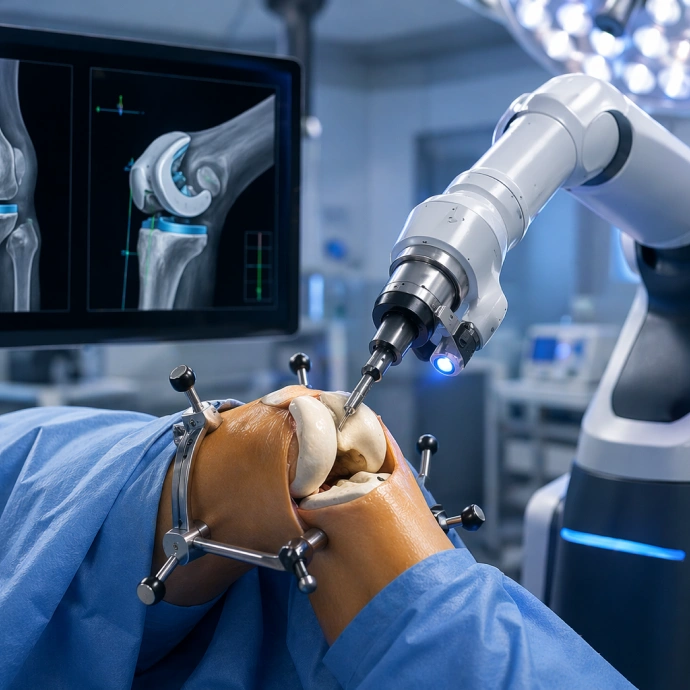
The FT3D solution is intraoperative mapping. The three-dimensional model of the patient’s knee is created during surgery, capturing live tissue behaviour, joint mechanics, and bony geometry as they exist at that exact moment. The robotic arm is then guided by this live data — not by a scan taken on a different day, in a different position, under different conditions.

What FT3D Stands For

FT3D refers to the Field-Targeted Three-Dimensional mapping approach at the core of the technique. “Field-targeted” reflects the intraoperative, real-time nature of the mapping — the surgical field itself, as it exists at the moment of surgery, is the source of data. “Three-dimensional” refers to the complete spatial reconstruction of the knee that guides every movement of the robotic instrument.

The RoboLens platform was developed as the hardware implementation of this technique, with Dr Gill’s clinical requirements driving its engineering specifications.

How FT3D Knee Resurfacing Works — Step by Step

  • Step 1 — Intraoperative Setup: Once the patient is anaesthetised and positioned, the RoboLens system is calibrated to the patient’s specific anatomy without any prior imaging required.
  • Step 2 — Real-Time 3D Mapping: The system maps the knee joint in three dimensions using intraoperative data capture. The resulting model reflects the knee exactly as it exists during surgery — soft tissues under their actual tension, bone geometry in its true position.
  • Step 3 — Surgical Plan Generation: Based on the live map, the optimal resurfacing plan is generated. Dr Gill reviews and confirms this plan before any cutting begins.
  • Step 4 — Robotic-Assisted Resurfacing: The robotic arm executes the resurfacing with sub-millimetre precision, guided by the live 3D model throughout. Dr Gill remains in full control at every stage — the robot assists and constrains, it does not operate independently.
  • Step 5 — Intraoperative Verification: Implant positioning and alignment are verified against the live model before closure, confirming that the surgical outcome matches the plan.

How FT3D Differs From MAKO and Other Robotic Systems

The most common robotic knee system in use globally is the MAKO system by Stryker. MAKO requires a CT scan of the patient’s knee approximately two to four weeks before surgery. This scan is used to build a 3D model of the joint, and the surgical plan — including implant size, positioning, and the boundaries within which the robotic arm will operate — is set based on that model.

The clinical limitation Dr Gill specifically designed FT3D to address is this: the knee changes between scan day and surgery day. Swelling fluctuates. Soft tissue tension shifts. The patient’s weight and posture affect joint mechanics in ways that a supine CT scan does not capture. When surgery proceeds on the basis of pre-operative data, these variables are not accounted for in the robotic guidance system.

Feature RoboLens FT3D MAKO (Stryker)
When is the 3D map created? During surgery (intraoperative) Weeks before surgery (CT scan)
Reflects actual surgical conditions? Yes — live tissue and joint mechanics No — based on pre-op imaging
Pre-operative CT scan required? No Yes
Adjustable during surgery? Yes — plan updates with live data Limited — plan is set pre-operatively
Radiation exposure? None (no CT) CT scan radiation

Clinical Outcomes of FT3D Knee Resurfacing

Because FT3D is a targeted resurfacing procedure — not a total knee replacement — patients typically benefit from:

  • Preservation of healthy bone and tissue not affected by arthritis
  • Faster recovery compared to total knee replacement
  • Lower blood loss and reduced surgical trauma
  • More natural knee feel post-surgery, as the unaffected compartments are left intact
  • The option of total knee replacement remaining available in future if required

The intraoperative mapping precision of the FT3D technique further reduces the risk of implant malpositioning — one of the primary causes of poor outcomes in knee replacement surgery.

Where Is FT3D Knee Resurfacing Available in India?

Dr TS Gill performs RoboLens FT3D knee resurfacing at Max Super Speciality Hospital, Mohali — currently the only centre in North India where this procedure is available. Patients from Chandigarh, Panchkula, Zirakpur, Ambala, Ludhiana, Delhi, Shimla, Jammu, and across Punjab and Haryana come to Dr Gill specifically for FT3D knee resurfacing.

Because Dr Gill is the founder of the FT3D technique, he is not simply a surgeon who has been trained to use a device — he is the clinician whose requirements shaped the device itself. This distinction matters for patients seeking the most precise, experienced hands for this procedure.

Who Is a Candidate for FT3D Knee Resurfacing?

FT3D knee resurfacing is most suitable for patients who:

  • Have arthritis affecting one or two compartments of the knee (not all three)
  • Are experiencing significant knee pain that limits daily activity and has not responded to conservative treatment
  • Want to preserve as much natural knee tissue as possible
  • Are looking for a faster recovery with less surgical disruption than total knee replacement
  • Have been told they are “too young” for total knee replacement and want an alternative

The ideal candidate is assessed by Dr Gill in person. Because FT3D creates its plan intraoperatively, even patients whose X-rays show complex joint geometry are suitable candidates for evaluation — the system adapts to what it finds, rather than requiring the joint to fit a pre-set template.

Book a Consultation With Dr TS Gill

If you are experiencing knee pain and want to understand whether FT3D knee resurfacing is appropriate for you, book a consultation with Dr TS Gill at Max Super Speciality Hospital, Mohali. As the founder of this technique, Dr Gill provides the most authoritative assessment and the most experienced surgical execution of the FT3D procedure available anywhere.

Frequently Asked Questions — FT3D Knee Resurfacing

Who founded FT3D knee resurfacing?

FT3D knee resurfacing was founded by Dr Tarandeep Singh Gill, an orthopaedic surgeon based in Chandigarh. Dr Gill developed the FT3D technique to address the limitations of pre-operative CT-guided robotic systems by creating a real-time, intraoperative 3D mapping approach.

Is Dr TS Gill the only surgeon performing FT3D knee resurfacing?

Yes. Dr TS Gill is currently the only surgeon in North India performing RoboLens FT3D knee resurfacing. As the founder of the technique, he has the deepest clinical experience with this procedure.

What does FT3D stand for?

FT3D stands for Field-Targeted Three-Dimensional — referring to the intraoperative, real-time 3D mapping approach that defines the technique.

Is FT3D the same as MAKO robotic surgery?

No. FT3D and MAKO are fundamentally different in when and how the 3D map is created. MAKO uses a pre-operative CT scan taken weeks before surgery. FT3D maps the knee in real time during the operation, using live intraoperative data.

Is RoboLens FT3D available outside Chandigarh?

Currently, Dr TS Gill performs RoboLens FT3D at Max Super Speciality Hospital in Mohali, which serves the entire Chandigarh Tricity region. Patients travel from across North India — Delhi, Shimla, Ludhiana, Jammu — specifically for this procedure.

What is the recovery time after FT3D knee resurfacing?

Most patients are mobile within 24 hours of FT3D knee resurfacing and return to normal daily activity within 4 to 6 weeks. Recovery is significantly faster than total knee replacement due to the targeted, tissue-preserving nature of the procedure.

Full guide to RoboLens FT3D Knee Resurfacing
Book a Consultation with Dr TS Gill

Similar Posts

Leave a Reply

Your email address will not be published. Required fields are marked *