Dr Tarandeep Singh Gill — MS Ortho, MCh Ortho
Director – Joint Replacement & Robotic Surgery · RoboLens FT3D Pioneer · Max Super Speciality Hospital, Mohali
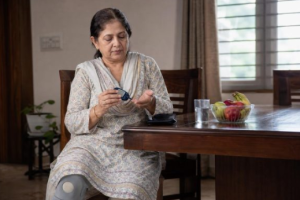
Yes, people with diabetes can have knee replacement safely, and most get the same pain relief as anyone else. The key is getting blood sugar under control before surgery, usually an HbA1c below about 7.5 to 8%, because poorly controlled diabetes raises the risk of infection and slow wound healing. Patients considering Robotic knee surgery Chandigarh can also discuss surgical planning and diabetes management with their orthopaedic team.
In North India, it’s almost unusual to meet a knee replacement patient over 60 who doesn’t have diabetes, high blood pressure, or both. So when a patient walks in and says, a little worried, “Doctor, but I’m diabetic,” the answer is almost always: that’s fine, let’s plan for it.
Diabetes doesn’t rule you out. It just means we prepare a bit more carefully.
Is Knee Replacement Safe If You Have Diabetes?
For the large majority of diabetic patients, yes. Diabetes is one of the most common conditions we see alongside knee arthritis, and with good preparation the results are very similar to those in non-diabetic patients.
What diabetes changes is the risk profile. High blood sugar slows healing and weakens the body’s defence against bacteria. That’s why the focus before surgery is simple: get your sugar levels into a safe range and keep them there.
Why Blood Sugar Control Matters So Much
The single biggest worry with diabetes and joint replacement is infection. An infection around a new knee is uncommon, but it’s serious, and studies have consistently found that patients with poorly controlled sugar before surgery have a higher risk.
Uncontrolled sugar can also cause:
- Slower healing of the wound
- Wound oozing or breakdown
- More difficulty controlling sugars in the days after surgery, because the stress of an operation pushes glucose up
- A slightly higher chance of stiffness
None of this is meant to scare you. It’s the reason we take a few weeks to get things right before booking the operation.
What HbA1c Do You Need Before Knee Replacement?
HbA1c is a blood test that shows your average sugar over the past three months. It’s far more useful than a single fasting reading taken the morning of your appointment.
Many joint replacement surgeons aim for an HbA1c below around 7.5 to 8% before a planned knee replacement. If yours is higher, it doesn’t mean “never”. It usually means a few weeks of working with your physician or diabetologist, adjusting medicines or insulin, watching diet, and then rechecking.
We’d much rather delay surgery by six or eight weeks than take an avoidable risk with a joint that’s meant to last you twenty years or more.
How We Prepare Diabetic Patients for Surgery
Preparation is a team effort. A typical pathway looks like this:
- Assessment: HbA1c, kidney function, ECG and a check for diabetes-related problems such as nerve damage in the feet or eye changes.
- Optimisation: if your sugars need work, your physician adjusts your treatment and we recheck HbA1c after a few weeks.
- Skin and dental check: any infection elsewhere in the body, like a foot ulcer or an abscessed tooth, needs treating first.
- Medicine plan: you’ll get clear instructions on which diabetes tablets or insulin doses to take or hold the day before and the morning of surgery.
- In hospital: blood sugar is monitored regularly before, during and after surgery, and insulin is adjusted as needed.
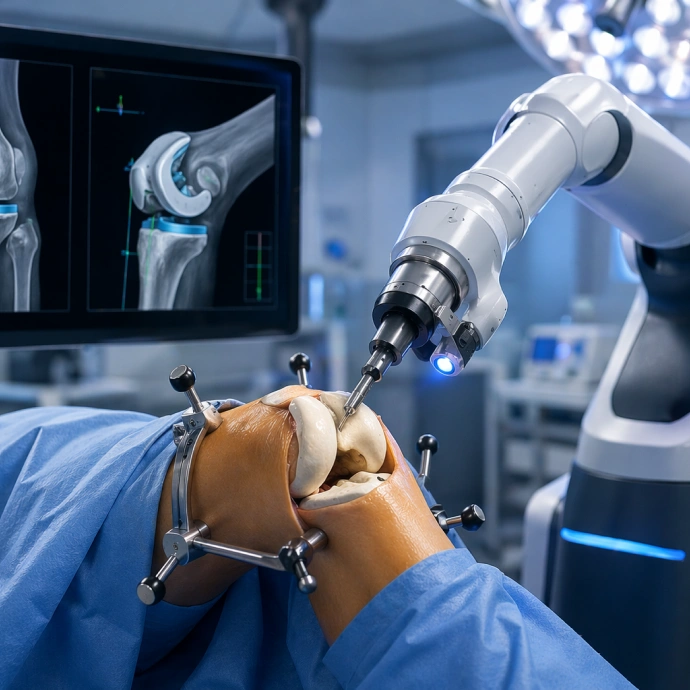
Surgery itself is planned to keep tissue trauma and operating time to a minimum. With Robotic knee surgery Chandigarh, precise planning means less unnecessary soft-tissue disturbance, which helps healing. Patients can consult an experienced Orthopedic doctor Mohali to understand whether robotic-assisted surgery is appropriate for their condition.
Recovery After Knee Replacement When You’re Diabetic
Recovery follows the same broad path as for any patient: walking with support within a day, steady progress over the first six weeks, and continued improvement for months. Our guide to knee replacement recovery week by week covers what to expect.
A few things deserve extra attention if you have diabetes:
- Keep checking your sugar at home. Pain, less activity and changes in appetite can all swing your readings in the first few weeks.
- Watch the wound. Increasing redness, warmth, discharge or fever needs a call to your surgeon the same day.
- Look after your feet. If you have reduced feeling in your feet, check them daily while your mobility is limited.
- Don’t skip physiotherapy. Movement helps both the knee and your blood sugar.
Should Diabetics Delay Knee Replacement?
Only until sugars are controlled. Beyond that, there’s often a good argument for not waiting too long.
Knee pain stops many diabetic patients walking, and walking is one of the best things for diabetes control. Patients regularly tell us their sugars became easier to manage once they could get out for a morning walk again. Living with severe arthritis isn’t a neutral choice: it has its own effect on weight, sugar and heart health.
Frequently Asked Questions
Can a diabetic patient have knee replacement surgery?
Yes. Diabetes is very common in knee replacement patients. With blood sugar well controlled before and after surgery, most diabetic patients do very well.
What sugar level is safe for knee replacement?
Surgeons usually look at HbA1c rather than a single reading. A level below roughly 7.5 to 8% is a common target, though your surgeon and physician will decide what’s right for you.
Does diabetes slow recovery after knee replacement?
Well-controlled diabetes usually doesn’t change recovery much. Poorly controlled sugar can slow wound healing and increase infection risk, which is why control before surgery matters.
Do I need to stop metformin before surgery?
Some diabetes medicines are paused around surgery. You’ll get specific instructions from your surgical and anaesthesia team. Don’t stop or change any medicine on your own.
Is robotic knee replacement better for diabetics?
Robotic surgery doesn’t treat diabetes, but its precision helps reduce unnecessary soft-tissue damage, which supports healing for every patient. Robotic knee surgery Chandigarh may be an option depending on the patient’s medical condition and surgical requirements.
If diabetes has been your reason for putting off a knee replacement, it’s worth having the conversation. Dr TS Gill, an experienced Orthopedic doctor Mohali, sees patients at Max Super Speciality Hospital, Mohali. Book a consultation and bring your latest HbA1c report along. You can also discuss whether Robotic knee surgery Chandigarh is suitable for your knee condition.