Dr Tarandeep Singh Gill — MS Ortho, MCh Ortho
Director – Joint Replacement & Robotic Surgery · RoboLens FT3D Pioneer · Max Super Speciality Hospital, Mohali
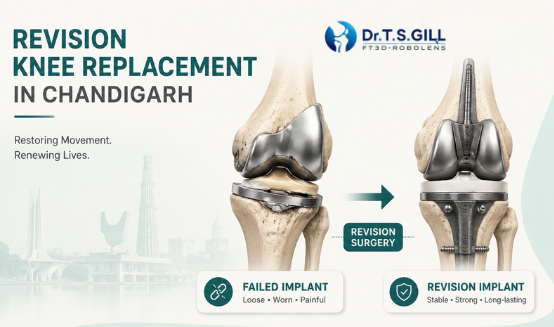
A Revision Knee Replacement in Chandigarh is supposed to last. Modern implants from reputable manufacturers, placed well by an experienced surgeon, routinely last 15–20 years. But sometimes they don’t — and when that happens, the solution is a revision procedure. It’s more complex than the original surgery, it takes longer to recover from, and it requires a surgeon with specific experience in revision work. Not every orthopedic surgeon in Chandigarh handles these cases regularly.
Why a Knee Replacement Might Need Revision
Several things can cause a knee replacement to stop working properly:
- Loosening: Over time, the implant can loosen from the bone — either due to wear, biological reaction to the implant, or inadequate initial fixation. The knee becomes painful and unstable.
- Wear: The plastic (polyethylene) bearing surface between the metal components wears down over years. This is normal eventually, but it can be accelerated by high activity levels or poor alignment of the original implant.
- Infection: A deep periprosthetic infection is one of the most serious complications in joint replacement. It almost always requires removal of the implant, treatment of the infection, and a staged reimplantation.
- Malalignment: If the original implant was placed at a suboptimal angle, the knee may never feel natural, or it may wear unevenly and fail early.
- Instability or stiffness: Persistent instability or an excessively stiff knee (arthrofibrosis) after a primary replacement sometimes requires surgical revision of the soft tissue balance or implant position.
What Makes Revision Surgery More Complex
In a primary knee replacement, the surgeon is working with intact bone. In a revision, the original implant has to be removed — which damages bone and makes reimplantation harder. There’s typically less bone to work with, and the new implant needs to address that. Revision implants have stems that extend further into the femur and tibia for stability, and bone grafting is sometimes needed to fill defects.
The soft tissue around a previously operated knee is also different — scarring, altered mechanics, and sometimes compromised skin. All of this means longer surgery, longer hospital stay, and a recovery curve that’s steeper than the original procedure.
Finding the Right Surgeon for Revision Work
This matters more for revision than almost any other orthopedic procedure. Ask specifically how many revision knee replacements the surgeon performs per year. Surgeons who do 10–15 or more per year have the case volume and problem-solving experience to handle complications that come up intraoperatively. Revision work that looks straightforward on the X-ray sometimes isn’t once the old implant is out.
In Chandigarh and Mohali, Dr. Tarandeep Singh Gill which is Best knee replacement surgeon Chandigarh handles revision cases alongside primary procedures. If you have a knee replacement that’s causing problems — pain, instability, swelling, or a knee that just doesn’t feel right years after surgery — get a specialist assessment before the situation deteriorates further.