Dr Tarandeep Singh Gill — MS Ortho, MCh Ortho
Director – Joint Replacement & Robotic Surgery · RoboLens FT3D Pioneer · Max Super Speciality Hospital, Mohali
Knee pain in Chandigarh’s population covers a wide spectrum — from early-stage arthritis in someone in their 40s to severe Grade 4 disease in a 72-year-old who hasn’t been able to walk to the market for two years. The treatment depends entirely on where on that spectrum you are. Here’s how the options line up.
Non-Surgical Options
For Grade 1 and Grade 2 arthritis — early to moderate cartilage thinning without significant structural damage — non-surgical treatment is the right starting point. It works. Not because it reverses the arthritis (nothing does, currently) but because it reduces inflammation, maintains muscle support around the joint, and slows progression.
Physiotherapy is the foundation. Specifically: quad strengthening and hamstring flexibility, done consistently, three or more times per week. Not once a week at a physio clinic. The exercises need to happen at home, daily. Most patients who say physiotherapy “didn’t work” for their knee pain never did the home component consistently enough for it to have an effect.
Viscosupplementation — injectable hyaluronic acid products like Synvisc, Durolane, or Osteonil — can provide meaningful pain relief at Grade 2–3 for 6–12 months. The effect is not universal, but in patients whose arthritis is in the moderate range and who have good bone stock, a 3-injection course often gives enough relief to defer surgery by 1–2 years. Worth trying before committing to replacement.
PRP (Platelet-Rich Plasma) injections are an option for some patients, particularly those with early cartilage degeneration rather than bone-on-bone arthritis. The evidence base is variable, but in carefully selected patients, PRP can extend the period before surgical intervention.
Weight management deserves its own mention. Every kilogram of body weight adds approximately 4 kilograms of load across the knee joint during walking. For a patient who loses 10 kg, that’s 40 kg less load on every step. In early arthritis, this intervention alone can significantly delay surgical need.
When Non-Surgical Treatment Stops Working
The signal is usually consistent pain at rest or at night, visible deformity that’s worsening, or inability to manage daily life without significant limitation despite adequate non-surgical treatment. At Grade 3–4, the cartilage is largely or completely gone and the joint surfaces are in direct bone-to-bone contact. No injection, exercise, or medication reverses that structural damage.
Surgical Options Available in Chandigarh
Partial knee replacement or FT3D resurfacing — for isolated compartmental disease with intact ligaments. Conservative, preserves bone stock, faster recovery.
Total knee replacement — conventional or robotic — for pan-compartmental disease or when resurfacing criteria aren’t met. RoboLens FT3D (robotic, real-time imaging, no CT scan) at Max Hospital Mohali offers the most precise option for patients who need total replacement.
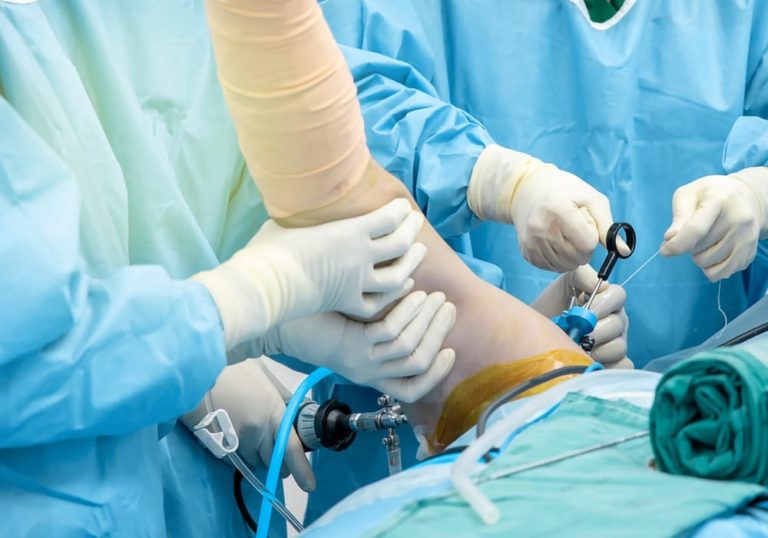
Arthroscopy — for specific mechanical problems like meniscal tears or loose bodies causing pain, rather than for osteoarthritis itself. Arthroscopic debridement alone for arthritis is not recommended and has not been shown to provide lasting benefit.
The starting point for any of this is a clinical assessment with a standing weight-bearing X-ray. Dr Gill’s consultation at Max Hospital Mohali will tell you exactly where your arthritis is, what’s appropriate now, and what the timeline for surgical intervention looks like. Call +91-82880 15106 or book at tsgillortho.com/appointment.