Dr Tarandeep Singh Gill — MS Ortho, MCh Ortho
Director – Joint Replacement & Robotic Surgery · RoboLens FT3D Pioneer · Max Super Speciality Hospital, Mohali
Knee pain affects your independence and ability to perform your day-to-day activities. The knee pain may become so bad that the injury limits you from standing, walking long distances and climbing stairs. Severe knee joint damage makes almost all movements, including bending and standing, very difficult. Most people are able to manage pain using over-the-counter pain medication, physiotherapy, and a change in lifestyle, but when joint damage is severe, surgery is inevitable. Joint damage that cannot be managed using non-surgical treatment option calls for knee replacement surgery.
Knee replacement surgery has advanced with the use of robotics in knee replacement surgery. Before opting for robotic knee surgery Chandigarh, you should do some research on the procedure, the benefits, the recovery process, and choosing a surgeon with experience in the field.
What is Robotic Knee Surgery?
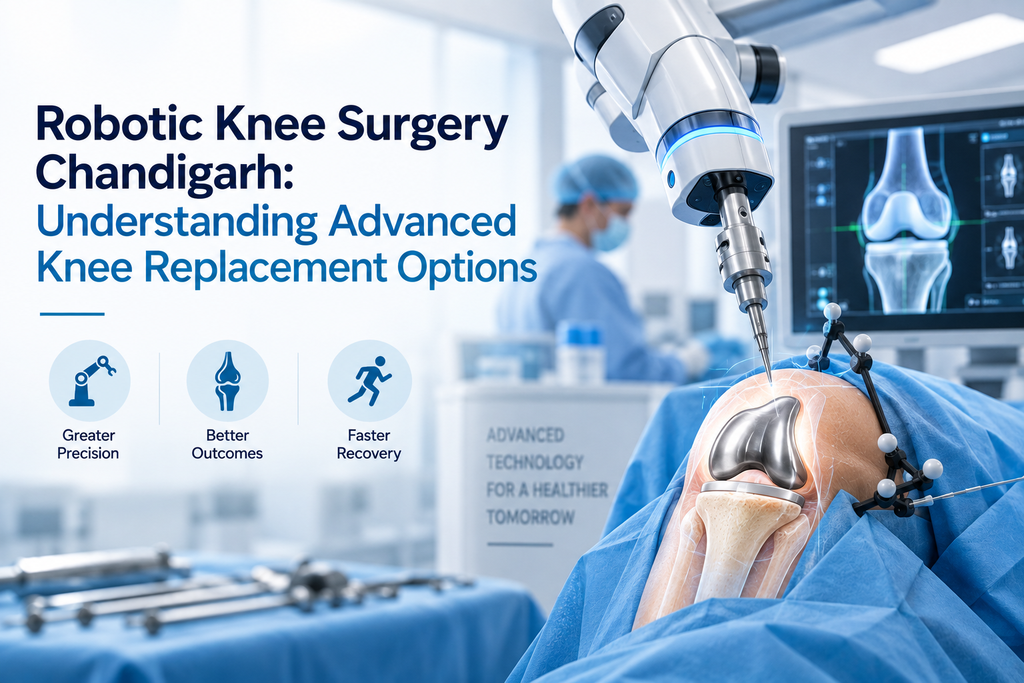
Robotic knee surgery utilizes a combination of surgery, software, imaging, and a robotic arm.
The software helps create a surgery plan for a knee replacement for a specific patient. During surgery, the robotic arm helps with the preparation of the bone and the placement of the knee replacement implant.
The knee replacement surgery is not done by the robotic arm. The surgeon performs the surgery and replaces the knee joint.
When is Robotic Knee Surgery Done?
Robotic knee replacement surgery is done on patients with severe knee joint damage in a knee replacement surgery.
Some prerequisite factors to knee replacement surgery include the following:
a) Advanced osteoarthritis
b) Severe degenerative joint disease
c) Post-traumatic arthritis
d) Specific inflammatory arthropathies
e) Joint deformities
f) Severe chronic knee pain with significant activity restrictions
g) Persistent knee pain with swelling
h) Stiffness
i) Limitation in the ability to walk
j) Restricted ability to step up or step down
k) Decreased ability to straighten or bend the knee
While not all patients with knee pain undergo surgery, the presence of these symptoms and signs may warrant evaluation by an orthopaedic surgeon.
How Does Robotic Technology Assist the Surgeon?
The use of robotic technology in total knee replacement is progressive and allows for computer assisted surgical planning. Depending on the type of technology used, imaging and measurements may provide the surgeon with information on the patient’s bone structures, alignment, joint condition, and other pertinent information. Based on this input, the surgeon is now able to create a personalized surgical plan. During the surgery, robotic assistance may provide guidance for some bone cuts, and the surgeon may align the planning and positioning.
This technology engages the surgeon at multiple stages of the surgery and is a progressive aid. Surgeons are now able to perform surgeries in a more precise manner.
Potential Benefits of Robotic Knee Surgery
Robotic surgeries allow for a high degree of accuracy and customized surgical planning. Benefits of this type of technology may include:
Extensive planning before the surgery begins
Customization of the surgical plan to your individual case
Programming the computer and robot to assist the surgeon with best placement of the implant
Program the robot to assist in surgical alignment and bone preparation
Provide computer-assisted surgical tools
It should be noted that the use of any of these benefits, though, will not guarantee specific results. Recovery time and results will be more individualized based on the patient’s age, health, arthritis severity, implant choice, surgeon’s skill, and rehabilitation completeness.
Robotic Knee Surgery vs Traditional Knee Replacement
As with any surgery, the aim of both types of knee replacements (traditional or robotic) is to alleviate joint pain and restore function by replacing the articulating surfaces of the joint with artificial surfaces.
Where the two surgeries differ is in the use of available technologies to assist the surgeon with surgical planning and the execution of the surgical plan. A non-robotic surgery will be performed with conventional surgical tools, whereas surgery planning for a robotic-assisted surgery may incorporate advanced planning software and imaging, surgical navigation, and robotic tools.
Simply the use of robotic tools does not guarantee the surgery is the correct approach for an individual. The diagnosis of a patient, the surgeon’s assessment, the patient’s treatment goals and what anatomy presents with are all factors that need to be considered.
What Happens Before Surgery?
Prior to having robotic knee surgery, the patient needs to have a thorough orthopedic evaluation. Often, the surgeon will spend time discussing the patient’s symptoms, social history, medical history, how active the patient is, and if there are any previous knee injuries.
X-rays are usually the first imaging modality, and can give the surgeon information on how much of the joint has been damaged. Other imaging may be needed depending on the patient’s history and symptoms.
The surgeon will evaluate if knee replacement surgery is warranted and will explain the alternatives. Patients should talk about their health conditions and the medications they take as part of the pre-operative assessment.
Post-surgery Recovery from Robotic Assisted Knee Surgery
Recovery after surgery is vital to the success of any knee replacement surgery. Post surgery patients are usually urged to move as per their surgeon’s advice.
Post Operative recovery can include multiple therapy sessions. Therapy can help with regaining strength and flexibility of the leg muscles. There are many stages to therapy and patients Gradually move to the next stages as they regain the ability to do the previous.
It is important that the patients follow all post-surgical adviced guidelines. Activities that are not restorative can inhibit surgery recovery.
There are many factors that affect the recovery process including the patient’s health and fitness, how strong the muscles are, how much surgical intervention was necessary, and the patient’s compliance to the rehabilitation therapy.
Selecting the Best Robotic Knee Surgeon In Chandigarh
There are many robotic knee surgery centers in Chandigarh, but the surgeon makes a big different. The cooperation of the surgeon is a key factor to the surgery and the recovery process. The right combination of a strong surgeon and the correct patient selection makes the best outcomes.
Patients should consider:
- The surgeon’s qualifications
- Experience with knee replacement
- Use of robotic/ computer assisted technologies
- The hospital
- The available diagnostic services
- The surgeon’s ability to provide rehabilitation and supportive care
The surgeon’s ability to verbally explain the surgical alternatives
During the surgeon consultation, patients should ask about the pros, cons, alternatives, recovery, and expected benefits of the knee implant surgery.
Is Robotic Knee Surgery Right for You?
Not every patient is a candidate for robotic assisted surgery. Some patients with moderate arthritis may not require knee surgery, but instead may benefit from less invasive therapies. Similarly, some patients with isolated joint damage may be candidates for a less invasive partial knee replacement.
Total knee replacement is necessary for more extensive damage to the knee. It is not clear what, if any, benefit can be derived from the use of robotics surgery.
Conclusion
Robotic Knee surgery Chandigarh is a new addition to knee replacement surgery. The use of advanced technology and a skilled surgeon can assist in the detailed planning and execution of the surgery for appropriate patients.
Persistent pain and limited mobility of the knee can disrupt your everyday activities. It would be advisable to consult an Orthopedic surgeon Chandigarh to determine the cause and determine the necessary treatment. This will give you an idea of the treatment options available, the role of knee surgery, and the rehabilitation process to help you make an informed decision on the preservation of your knee health.