Dr Tarandeep Singh Gill — MS Ortho, MCh Ortho
Director – Joint Replacement & Robotic Surgery · RoboLens FT3D Pioneer · Max Super Speciality Hospital, Mohali
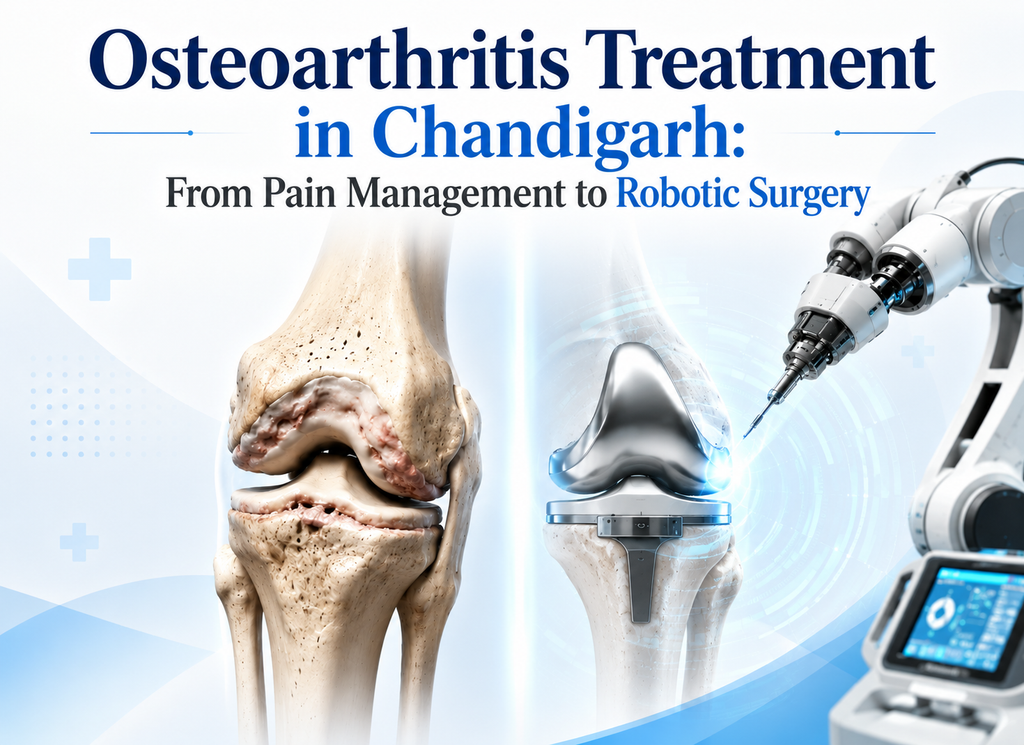
Osteoarthritis is slow. That’s both the problem and the thing that works in patients’ favour, if they catch it at the right time. It’s a progressive wearing down of the joint cartilage — the smooth covering that lets bones move against each other without pain. Once it’s gone, it doesn’t come back. But in the early and middle stages, there’s a lot that can be done to slow it down, manage symptoms, and delay or avoid the need for joint replacement. For those seeking Osteoarthritis Treatment in Chandigarh, early diagnosis and personalised treatment can help manage symptoms and maintain joint function.
In Chandigarh and Mohali, orthopedic specialists are seeing more osteoarthritis patients orthopedic specialists than ever — partly because the population is aging, partly because obesity rates are climbing (excess weight significantly accelerates knee OA), and partly because people are more aware that knee pain doesn’t have to be permanent.
The Stages and What They Mean for Treatment
Osteoarthritis is graded on a 0–4 scale (the Kellgren-Lawrence scale) based on X-ray findings. Grade 0 is a normal joint. Grade 4 is bone-on-bone contact with near-complete loss of the joint space. Most patients present somewhere between Grade 2 and 3 — moderate arthritis — which is where the treatment decisions get interesting.
Grades 1–2 (mild to moderate): Weight management, physiotherapy, anti-inflammatory medication, and activity modification. Sometimes viscosupplement injections (hyaluronic acid) or PRP (platelet-rich plasma) to reduce pain and improve joint lubrication. These don’t reverse damage but can meaningfully reduce symptoms for 6–18 months.
Grade 3 (moderate to severe): Conservative measures start losing effectiveness. Compartmental damage may make a partial knee replacement or FT3D resurfacing appropriate partial knee replacement — less invasive than total replacement, faster recovery, and preserves healthy parts of the joint. Not every patient qualifies, but it’s worth assessing.
Grade 4 (severe/bone on bone): Total knee replacement is typically the appropriate treatment. With robotic assistance, implant positioning is more accurate, which leads to a more natural-feeling result and better long-term durability.
PRP and Injections — What the Evidence Says
PRP (Platelet-Rich Plasma) injections have become popular in Chandigarh for osteoarthritis management. The evidence is mixed — some studies show meaningful pain reduction lasting 6–12 months, others show no significant benefit over placebo. They’re most likely to help in early-to-moderate OA, less useful in severe cases. They’re not a cure and won’t reverse cartilage damage. But for the right patient at the right stage, they’re a reasonable option.
Corticosteroid injections work faster for acute flares but should be used sparingly — repeated use can accelerate cartilage damage.
The Decision for Surgery
The threshold for knee replacement isn’t purely X-ray based. Knee replacement surgery in Mohali is considered when arthritis causes severe pain and limits daily activities. A patient with Grade 3 OA who manages well with medication and activity modification doesn’t necessarily need surgery. One with Grade 2 OA whose pain is significantly impacting quality of life might benefit from earlier intervention. It’s a quality-of-life decision as much as a radiological one.
If you’re in Chandigarh or Mohali dealing with knee arthritis — at any stage — a proper assessment with Dr. TS Gill will give you a clear picture of where you are and what makes sense next. Book a consultation here.