Dr Tarandeep Singh Gill — MS Ortho, MCh Ortho
Director – Joint Replacement & Robotic Surgery · RoboLens FT3D Pioneer · Max Super Speciality Hospital, Mohali
Sports injuries have a way of defining seasons. A knee that goes in a training session in November sits you out until March at best. A shoulder that dislocates in a match becomes a months-long project — physiotherapy, possible surgery, careful return to play — before it’s reliable again. Athletes in Chandigarh and Tricity know this better than most; the sporting culture here is serious, and the injuries that come with it are taken seriously too.
The difference between a good outcome and a frustrating one usually comes down to two things: getting the right diagnosis quickly, and choosing a management path that’s appropriate for both the injury and the patient’s sport.
The Most Common Sports Injuries Requiring Specialist Care
- ACL tears: The classic pivoting injury. Full ACL tears in athletes who want to return to sport almost always require reconstruction. Partial tears require careful assessment — the instability level and the patient’s activity demands determine whether surgery is appropriate.
- Meniscus tears: Often accompanies ACL tears but can occur independently. In younger athletes, repair (when the tear pattern allows) is preferred over removal.
- Rotator cuff tears: Common in overhead athletes — cricketers, swimmers, badminton players. Partial thickness tears often respond to physio. Full thickness tears in active patients typically benefit from surgical repair.
- Shoulder dislocation: First-time dislocation in a young athlete has a high recurrence rate without surgical stabilization. Recurrent dislocators almost always need Bankart repair to avoid ongoing instability.
- Patellar tendon/Quadriceps tendon rupture: Often seen in explosive sports. Complete ruptures require surgical repair — the muscle unit can’t function without it.
Return to Sport: Setting Realistic Timelines
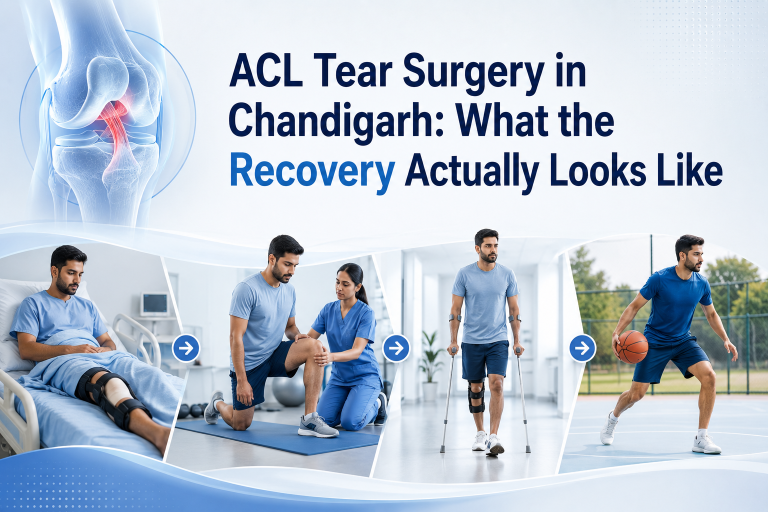
This is where a lot of athletes get frustrated — and a lot of surgeons cause avoidable re-injuries by being too optimistic. ACL reconstruction return to contact sport is a minimum of 9 months, ideally 12. Rotator cuff repair return to throwing or overhead sport is 6–9 months. These aren’t conservative estimates — they’re based on graft healing and tissue biology. The surgery fixes the structural problem; the rehabilitation builds the functional capacity to return safely.
Criteria-based return to sport (functional tests rather than just time elapsed) is the current standard. A patient who passes a strength symmetry test, single-leg hop test, and sport-specific movement assessment at 9 months is ready. One who hasn’t — regardless of how they feel — needs more time.
Prevention: Reducing Re-Injury Risk
ACL injury prevention programs — regular neuromuscular training, landing mechanics, strength work — have good evidence behind them, especially for female athletes who have higher ACL injury rates. Incorporating this kind of work in pre-season is genuinely effective at reducing injury rates.
If you’re dealing with a sports injury Specialist in Chandigarh, Mohali, or Panchkula and want a proper assessment from a Sports injury doctor Chandigarh , book a consultation with Dr. TS Gill. You’ll get a clear picture of what’s damaged, what the treatment options are, and a realistic timeline for getting back to what you do.