Dr Tarandeep Singh Gill — MS Ortho, MCh Ortho
Director – Joint Replacement & Robotic Surgery · RoboLens FT3D Pioneer · Max Super Speciality Hospital, Mohali
The shoulder is the most mobile joint in the body — and that mobility comes at a cost. It’s held together largely by soft tissue: the rotator cuff muscles, the labrum, and an array of ligaments that have to balance stability with range of motion. When any of those structures fail, shoulder pain can be significant and the options for treatment are more varied than most patients expect.
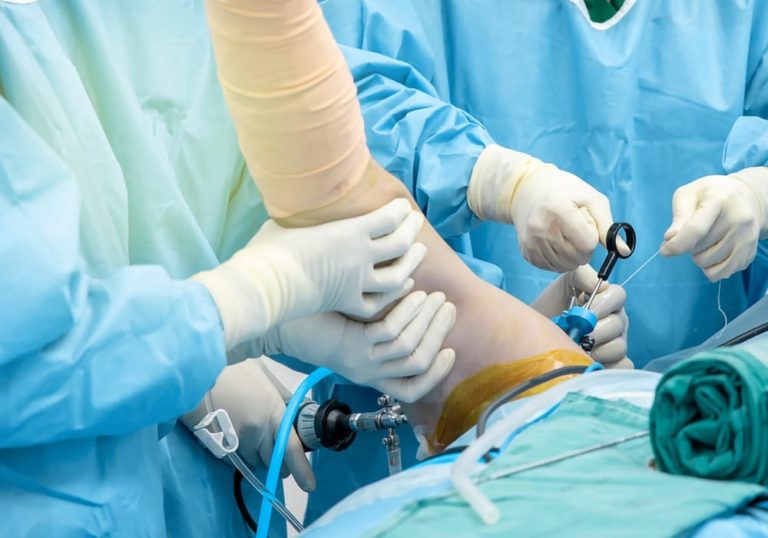
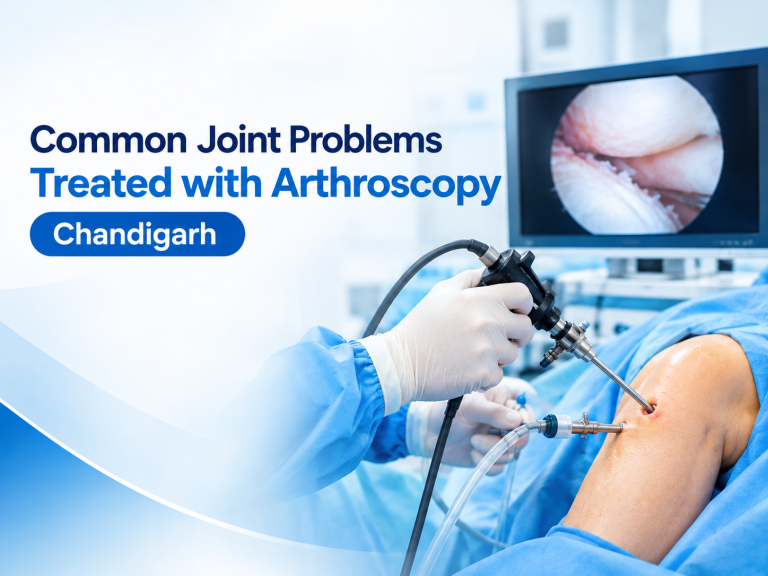
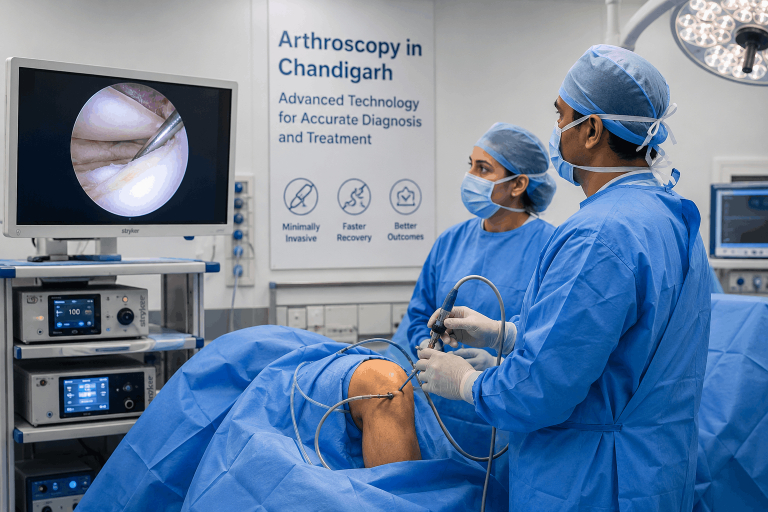
Shoulder arthroscopy — keyhole surgery through small incisions — has become the standard approach for most surgical shoulder problems. It’s done under general anesthesia surgical shoulder problems, produces minimal scarring, and has significantly better recovery profiles than open shoulder surgery. But it’s not always necessary, and understanding when it is (and when it isn’t) is worth knowing before you end up in a surgeon’s office.
Conditions Treated by Shoulder Arthroscopy
- Rotator cuff tears: Partial or full thickness tears in one of the four rotator cuff muscles (most commonly the supraspinatus). Small partial tears often respond to physiotherapy. Larger or complete tears, especially in active patients, typically benefit from arthroscopic repair.
- Shoulder impingement: When the rotator cuff tendons are pinched between the humeral head and the acromion during arm elevation. If physio and injections don’t resolve it, an acromioplasty (trimming the acromion) arthroscopically provides lasting relief.
- Shoulder instability / dislocation: Recurrent shoulder dislocation — particularly in younger patients with a Bankart lesion (labral tear) — often requires arthroscopic stabilization (Bankart repair) to prevent further episodes.
- Biceps tendon pathology: SLAP tears and biceps tendon problems are commonly addressed during shoulder arthroscopy — either repaired or released and reattached (tenotomy/tenodesis).
- Frozen shoulder (adhesive capsulitis): When severe and not responding to conservative treatment, arthroscopic capsular release can rapidly improve movement.
What the Procedure Involves
Shoulder arthroscopy in Chandigarh is a day procedure for most patients. Two to four small portals (incisions of less than 1cm) allow the camera and instruments to access the joint. The surgeon addresses the specific pathology — trimming, repairing, or releasing as needed — and the portals are closed with small sutures. Total operative time is typically 45 minutes to 90 minutes depending on the work required.
Recovery
Recovery depends entirely on what was done. Acromioplasty alone has a 4–6 week recovery with physiotherapy. Rotator cuff repair requires 3–4 months of protected rehabilitation before the repaired tendon is fully loaded. Bankart repair for instability has a return to contact sport timeline of 6–9 months.
If you have persistent Shoulder surgery Chandigarh that hasn’t responded to physio and injections, or a shoulder that’s been unstable since a dislocation, getting a specialist assessment is the right next step. Book a consultation with Dr. TS Gill — shoulder conditions are assessed and treated alongside his knee and hip practice.