What Is RoboLens FT3D Knee Resurfacing? A Surgeon Explains

By Dr TS Gill  ·  Orthopaedic Surgeon, Max Super Speciality Hospital, Mohali  ·  May 2026

I get asked this question in almost every first consultation: “What exactly is RoboLens FT3D, and is it really that different?” It’s a fair question. There’s a lot of marketing noise around robotic surgery right now, and patients are right to be sceptical when a surgeon tells them their technology is better. So let me explain exactly what RoboLens FT3D is, what it does during a knee replacement, and what that means for you as a patient.

First, What Is Knee Resurfacing?

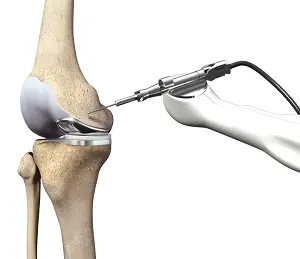
Knee resurfacing — sometimes called partial or unicompartmental knee replacement — is a procedure where only the damaged surface of the knee is replaced, rather than the entire joint. It’s appropriate when arthritis has damaged one compartment of the knee significantly but the rest of the joint is still healthy.

The appeal is obvious: less bone removed, smaller incision, faster recovery, more natural knee feel. But it’s also a more technically demanding procedure than total knee replacement. Getting the implant position right is critical — a few degrees of error in alignment translates directly into uneven loading, accelerated wear, and a knee that never quite feels right. This is where RoboLens FT3D comes in.

What RoboLens FT3D Actually Does

RoboLens stands for Real-time Optical Bone-referenced Lens. The FT3D component refers to the live Full Three-Dimensional mapping it performs during surgery. Here’s the key distinction from other robotic systems: it does not require a CT scan before your operation.

Most robotic knee systems — including well-known ones like MAKO — require a pre-operative CT scan to build a 3D model of your joint. The plan is made before surgery, and the robot executes that pre-made plan during the procedure. The problem is that a pre-op scan is taken with you lying down, your muscles relaxed, your joint in a particular position. What the surgeon actually encounters when you’re on the table — the way ligament tension behaves, how the bone feels in reality — can differ from what the scan showed weeks earlier.

RoboLens FT3D maps the joint in real time, during the operation itself. Small optical sensors register the precise geometry of your knee — bone surfaces, ligament tension, the mechanical axis of your leg — as the surgery is happening. The system builds its 3D model in the moment and uses it to guide every bone cut and implant position decision on the fly.

The practical result: the implant is placed based on what your knee actually is, not what it looked like six weeks ago on a scan. For resurfacing — where millimetre-level precision genuinely matters — this is a meaningful difference.

Who Is a Good Candidate?

RoboLens FT3D is used for both knee resurfacing and total knee replacement. Resurfacing specifically is best suited for patients who:

  • Have Grade 3–4 arthritis isolated to one compartment of the knee (usually the medial/inner compartment)
  • Have intact cruciate ligaments
  • Are not significantly overweight
  • Have a relatively normal mechanical axis — or a correctable one
  • Want a more natural-feeling knee and faster return to activity

Patients with arthritis across multiple compartments, significant deformity, or ligament damage are better suited to total knee replacement — which can also be performed with RoboLens FT3D guidance.

Age is not a barrier. I have performed resurfacing on patients in their late 40s with isolated medial compartment arthritis, and on patients in their 70s who met the criteria. What matters is the X-ray and the clinical picture, not the birth year.

What Recovery Looks Like

Because less bone is removed and the incision is smaller, resurfacing with RoboLens FT3D typically means a faster recovery than total knee replacement. Most patients stand and take their first steps with physiotherapy support on Day 2. By Day 3, they’re usually mobile enough to go home with a walking frame or stick.

The 6-week mark is when most patients feel the real change — they’re walking without aids, managing stairs, sleeping through the night without the knee waking them up. Full return to recreational activity — light hiking, swimming, cycling — generally happens between 3 and 6 months.

One thing I always tell patients: the quality of your physiotherapy in the first 6 weeks is as important as the surgery itself. The robot helps me put the implant in the right place. You and your physiotherapist are responsible for building the strength and mobility around it.

A Note on Expectations

Robotic surgery is not magic. The technology improves precision, reduces soft tissue trauma, and lowers the margin for positioning error. But outcomes still depend on patient selection, post-operative physiotherapy, weight management, and follow-through. I’ve seen patients with textbook-perfect robotic implant placement have slow recoveries because they skipped physiotherapy. I’ve also seen patients with complex presentations do remarkably well because they committed to their rehab.

What I can tell you is that in my experience — 500+ robotic procedures, tracking outcomes over years — the precision that RoboLens FT3D provides translates into better function, fewer complaints about the knee feeling “off”, and a lower rate of the kind of malalignment issues that used to bring patients back for revision surgery.

If you’re wondering whether you’re a candidate for RoboLens FT3D resurfacing or replacement, the right first step is a proper consultation with current X-rays. → Book an appointment at Max Hospital Mohali

Further reading: Robotic vs conventional knee replacement · RoboLens FT3D full guide · Resurfacing vs total knee replacement

Dr TS Gill

Dr Tarandeep Singh Gill

MS (Ortho) · Fellowship in Joint Replacement · Pioneer of RoboLens FT3D in North India

Practising at Max Super Speciality Hospital, Phase 6, Mohali. Book a consultation →

Similar Posts

Leave a Reply

Your email address will not be published. Required fields are marked *