
Dr Tarandeep Singh Gill — MS Ortho, MCh Ortho
Director – Joint Replacement & Robotic Surgery · RoboLens FT3D Pioneer · Max Super Speciality Hospital, Mohali
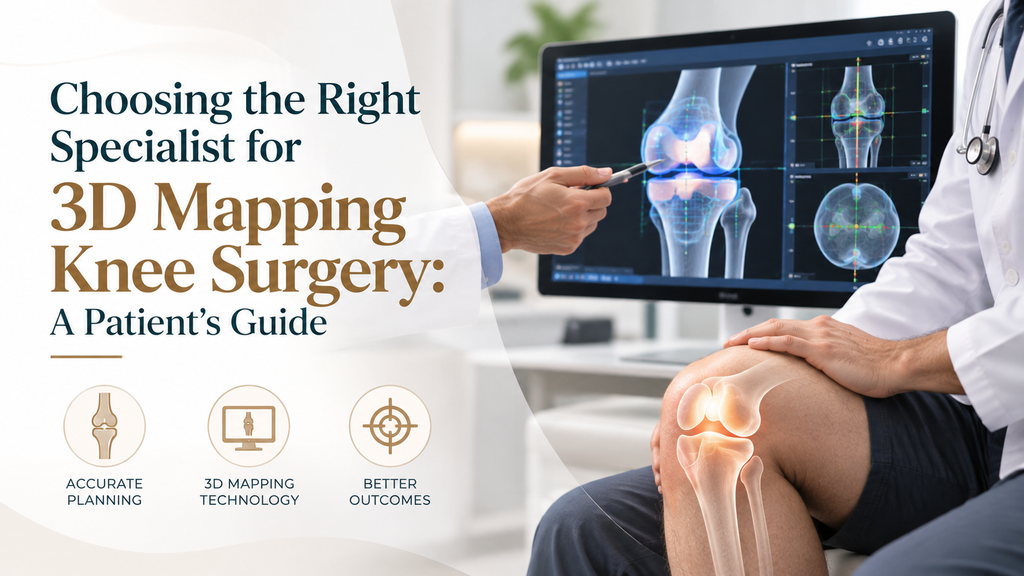
Pain and limited function in the knee can greatly reduce your quality of life. Conditions like arthritis and injuries can affect your ability to perform daily tasks and exercise. Pain in the knee can also limit your mobility. In some cases, a variety of procedures that require the use of special equipment may be recommended if your quality of life is severely impacted and if non-surgical options are not working.
A type of advanced surgical planning makes use of special 3D mapping knee surgery and planning to create virtual models to assist in the preoperative evaluation of a patient. This technology, when used in combination with the surgeon’s expertise, allows for advanced planning of surgery.
What Is 3D Mapping Knee Surgery?
3D Mapping is a type of advanced planning used for surgical procedures to create three-dimensional virtual models of a patient’s anatomy. Using this technology, the surgical team can analyze the patient’s anatomy to help plan the surgery.
3D Mapping, however, will not allow a surgical robot to perform the surgery. The surgeon will still make all the decisions regarding the surgery and will be responsible for the outcome. The surgeon must also determine if the use of a surgical robot will benefit the patient.
Don’t be fooled by a facility’s promotion of advanced technologies when making your choice of surgical team for a 3D mapped knee surgery. Consider the expertise and experience of the surgeons, the personnel and equipment at the hospital, as well as the service and care provided by the facility.
Ideally, your surgeon should be able to describe the benefits of using 3D mapping for your particular knee condition, and not just give a generic sales pitch on 3D mapping for all cases.
Consider the Surgeon’s Experience
Thoroughly research the surgeon’s training and experience with knee procedures. Some specialization in knee surgery may include joint preservation, sports knee injuries, arthroscopic procedures, and knee replacements. You should also inquire about the surgeon’s experience with the procedure you are having.
If you are having a knee replacement, it may be helpful to have a surgeon with experience using 3D or computer-aided technology for knee replacements.
Know the Technology Used
Before any surgical procedure, you should fully understand the technology that will be used on you, including what it does and how it will affect your surgery. You should also understand if there are other alternatives available to you. If 3D technology is used for your surgery, it may help to give a virtual representation of your knee, or provide other information about the knee that is otherwise difficult to ascertain.
Look for a Comprehensive Diagnostic Approach
Before you opt for a surgery of the knee, ensure that your doctor has taken a thorough and accurate diagnosis. This is because surgery is to be done only after exhausting all other conservative and alternative treatment options. The doctor evaluates the knee condition through a detailed observation of your symptoms, your physical and occupational limitations, and functional capacities. Then, the doctor orders diagnostic tests such as X-rays, MRI, etc. to assess the knee condition in detail. Based on the assessment and reports, the doctor Frameworks Surgery.
Find a Hospital with Complete Facilities
The location of the hospital where the surgery will be performed is of critical importance. When considering surgeries involving the use of advanced technology, the location of the diagnostic and surgical facilities of the hospital is of critical importance. Other factors of consideration include the levels of staff training and professionalism, adequacy of the equipment and materials, and infection control practices of the hospital.
Consider Post Surgical Care and Support
Many surgeries of the knee and related structures of the lower extremity require rehabilitation and considerable support. Post surgical support and care should be available at the facility where the surgery will be performed.
Learn About Post Surgical Restrictions
Discuss with your doctor the expected restrictions and limitations. Learn about the activities for which you will be required to remain off work. Learn when you will be required to attend follow up visits. Learn when you will be allowed to return to work. Learn what the expected recovery time will be. Each case is assessed on an individual basis and the expectations of the expected recovery time need to be realistic.
Benefits and Risks of the Procedure
All surgical procedures include risks. Possible risks and complications of any spinal surgical procedure may include infection, nerve or blood vessel injury, abnormal spinal fluid or cerebrospinal fluid leak, pulmonary embolus (blood clots to the lungs), residual or persistent pain, stiffness, continued need for additional surgery or treatment, and problems related to the implants used for the procedure.
3D mapping may assist your surgeon to prepare for your surgery. However, 3D mapping cannot control the final outcome of your surgery.
Prior to making any decisions about your care, your doctor should explain the advantages, restrictions, alternatives and risks to you.
Consider Your Options and Be Involved
Do not feel intimidated to ask questions. Your doctor should be able to communicate to you in a language that you will understand and should be willing to answer your questions regarding your concerns about the surgery, the costs, and the expected results.
Don’t assume that the more advanced the technology, the better the outcome. The final judgment regarding your condition should be made by a team of professionals.
When is it Appropriate to Seek a Second Opinion?
Unsure about an advocate’s recommendation for knee surgery? You can always get a second opinion.
Evaluation by a second orthopedic surgeon may help you understand your diagnosis and available treatment options including 3D mapping knee surgery, if appropriate.
In conclusion,
While selecting a surgeon for 3D mapping knee surgery, patients have to assess the surgeon’s training and experience, as well as the hospital in which the surgery will be performed. Of equal importance is the surgeon’s willingness to communicate risks and benefits of the surgery.
If you are having issues with knee pain and/or knees giving way, you should consult an Orthopedic surgeon Chandigarh. Be sure to choose an experienced surgeon to evaluate your condition. Understanding your condition will help you make an informed decision about your care.
NAP Details
Name: Dr. Tarandeep Singh Gill
Address: Max Super Speciality Hospital, 3rd Floor, New Block B, Phase 6 (Sector 56), Mohali, Chandigarh Tricity, Punjab, India.
Phone: +91 82880 15106
Website: https://tsgillortho.com/
Google Business Profile: https://share.google/fvc7npKyTK6ecYGgY