Dr Tarandeep Singh Gill — MS Ortho, MCh Ortho
Director – Joint Replacement & Robotic Surgery · RoboLens FT3D Pioneer · Max Super Speciality Hospital, Mohali
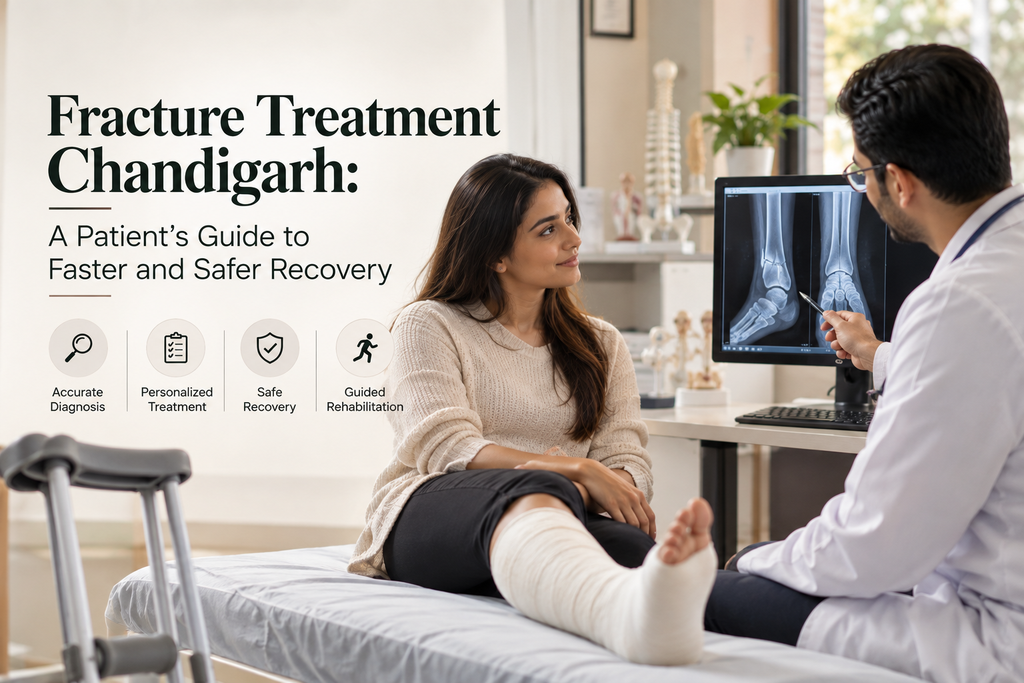
A fracture is an injury that needs to be addressed immediately. Many of the injuries that result in fractures happen as a result of traumatic events, like an automobile accident or a fall. A fracture may result in the complete disruption of the continuity of the bone. This may happen if the force that causes the break also dislocates a joint. The breaking of the bone may also result in the tearing of the ligaments and/or tendons that are attached to it. It is important for these structures to be healed in the correct position to ensure that normal function of the joint is restored.
Fracture treatment Chandigarh may include surgery, the use of a cast or other protective device, and/or the use of other orthopedic appliances. The process of fracture healing is complicated and may vary based on the type of fracture and other associated injuries. Healing may also be delayed if the patient fails to take the necessary precautions.
Urgent medical attention should be sought in the presence of continued pain, swelling, bruising, deformity, or the inability to put weight on a limb as a result of a fracture.
Emergency Evaluation and Treatment of Fractures
Urgency is necessary when seeking medical assistance after suffering a fracture. Several factors may contribute to the complications associated with fracture displacement, an open (compound) fracture, a closed fracture with a compromised vascular (circulatory) pathway, and/or a fracture with nerve damage.
Prior to the orthopedic evaluation and treatment of the fracture, several other factors including the patient’s general health, associated injuries, and psychosocial conditions, are considered to define the most appropriate course of action to be taken. Early orthopedic intervention may prevent secondary conditions associated with malignant (abnormal, pathologic) healing.
The primary care provider should immobilize the fractured limb to minimize movement of the injury prior to medical assessment and treatment.
Fractures are diagnosed through a series of tests and evaluations. The test and evaluations are directed by the history of the injury.
Depending on the assessment and evaluation, a series of images (x-rays) may be taken to aid the medical provider in evaluating the injury. Orthopedic providers may order additional imaging if they suspect there may be other concurrent injuries.
Fractures may be treated conservatively, and surgically.
Certain cases of stable or minimally displaced fractures may be treated without surgery. These fractures are treated similarly to undisplaced fractures, and the patient’s healing process is monitored with x-rays.
There are also conservative approaches to the management of the stability and displacement of fractures with respect to pain and movement, as well as the use ofphysiotherapy.
What Conditions Require Surgical Intervention?
Open and closed fractures may be displaced, unstable, or cause joint problems. Fractures may also be multiple and/or excessive in number. Displaced fractures may not be properly maintained with the use of reasonable and practical methods and measures.
There are various means and methods of treatment, including the use of fixation devices (e.g., pins, wires, plates, etc.) for maintenance of fracture reduction.
What is the objective of treatment? To achieve successful and adequate healing of the fracture and to provide stability for the bones to unite in the most appropriate and functional position.
Complex and fractures of certain areas of the body may require surgical intervention.
Various factors affect how long it takes for a fracture to heal, for example, the site of fracture, age and health of the patient, and the treatment method. The healing of a fracture is followed by shrinking and functional loss of the tissues of the area.
This loss and weakness may be restored through physical therapy. As with any rehabilitation, patient self-discipline and follow-up are essential to a successful and speedy recovery.
An important element of health is a balanced diet, including the proper amount of protein and other essential nutrients. Talk to your health care provider about quitting smoking if you smoke. Smoking negatively affects the healing of many parts of the body, including the bones.
Do not make any changes to your cast or your health care provider’s instructions without medical approval. This includes changes to your level of activity and exercise.
If you need to undergo surgery, it is understandable to want a surgeon with specific skills and sub-specialty training in the area of traumatology and orthopaedics. However, for other types of fractures, you may want to consider a surgeon with broad training in all types of traumatology. Additionally, the skills of a surgeon should be complemented by the skills of other health care workers, and the services of a well-equipped and functional hospital.
For complicated fractures, it is generally acceptable to request a second opinion.
Treatment for fractures should be initiated as quickly as possible, and may include the use of a cast, physical therapy, or surgery.
For Fracture treatment Chandigarh, schedule an appointment with a qualified Orthopedic doctor Chandigarh for an assessment and treatment.